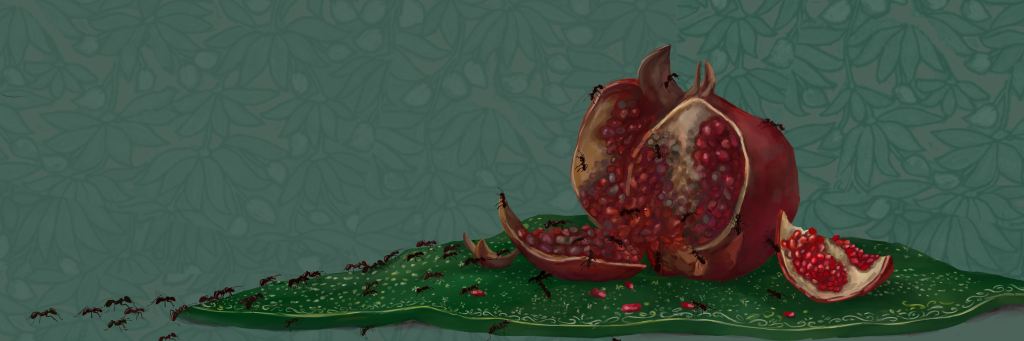
A Masculine Fest
It all started in the monsoon of 1950—or 51? It was a golden day, soon to turn grey. I had…
The online magazine of new writing from around the globe
14 October 2026
Evening used to come soft in Icacos, slipping through coconut trees and over cracked fishing pirogues on the shore. Lately, the light seemed harsher—orange, sharp, almost reflecting off the flares that burned across the gulf. You could still smell the diesel and fish from the morning catch. The old hermits sitting by the bridge said that meant rain would soon come. In the rum shop, the men were loud again, the way they get when fear turns to noise.
Amara wiped her hands on a rag behind the counter, watching them through the mirror over the rum bottles. Their faces looked doubled in the glass—one real, one warped—and she wondered which version told the truth.
‘Three girls now,’ Kissoon lamented, slamming down his domino. ‘Three gone, jus’ so.’
‘And allyuh still lettin’ them Spanish fellas roam free,’ another man shouted. ‘Big man with accent thick like oil.’ Amara recognised Nigel’s voice and rolled her eyes. Of course he would say that.
‘Too much a dem foreigner crossin’ de water now. Police cyah even keep track.’
‘Eh-eh, doh say so,’ chastised Nurse Joan. ‘Not all ah dem like that.’
Kissoon turned, eyes sharp. ‘So, who yuh think it is? Mama Dglo?’
The men laughed louder, but it sounded brittle to Amara’s ears, like seashells breaking.
Her jaw tightened. Granny always said laughter was how people spit fear out without tasting it.
‘Bush people believe in all kinda ting,’ Granny had said once, ‘but dey also want somebody real, somebody dey could touch, to blame. Try yuh hardest to doh be dat person.’
Amara swallowed, turning her gaze out the window in time to see the orange in the sky start to bleed into purple, the bush darkening.
She went to rinse a glass in the small steel sink, the cold water splashing over her fingers. From where she stood, Amara could see part of the old dock, not far behind the rum shop. Ricardo and Lucía were there—the only Venezuelans who had stayed in Icacos after arriving—but she wasn’t sure what they were doing. The dock was long defunct. But Amara liked to sit there when she needed quiet—a place to be alone.
She liked Ricardo. He kept to himself but was kind when she came to him to get fish gutted. His daughter, Lucía, was Amara’s age—18—but smaller, with hair black and shiny as molasses and a laugh that carried over the tide. They had been in the village nearly a year, long enough for some people to start forgetting they were strangers, until girls began going missing. Now Lucía’s laughter couldn’t reach anyone.
Amara remembered the first girl: 15-year-old Mary from next door. It had been three months ago, and the whole bay had smelled different that week—muddy and sour, like the river had turned over in its sleep. Mary’s mother had gone crazy and was in St. Ann’s Hospital now, if rumours were true.
The door creaked, and a gust of warm, sea-soaked air swept into the bar, dragging Amara from her thoughts. Cuffie stumbled in, already half-drunk, shirt open, belly glistening with sweat. The men shifted in their seats, some laughing, some not.
Cuffie always seemed to be in the wrong place at the right time—by the jetty when young girls came to buy fish, by the school fence when classes let out. People whispered about him but never too loudly. He used to be a fisherman, and fishermen carried their own kind of protection in the village.
He leaned on the counter and squinted at Amara. ‘Gimme a Carib, sweet girl.’
She didn’t answer, sliding the bottle across and walking away.
He laughed. ‘Yuh fraid I go bite?’
‘Leave d chile, Cuffie. Go drink yuh beer,’ someone called.
He banged the bottle down, foam spilling over. His voice cut above the low hum of conversation. ‘Dem girls, dey like to play ‘oman. Is play ting have consequence.’
The room fell silent.
Amara stared at him through the mirror. His reflection seemed darker than the rest, as if the rum he drank seeped into his skin. She wanted to throw something, shout something—but the quiet held her back.
Outside, thunder rumbled far off. The men began talking again, too loud now, and someone turned up the radio to drown out the approaching storm.
Her eyes drifted back to the dock. Ricardo and Lucía were still there. She thought she caught a glimpse of a boat engine or outboard, glinting briefly in the dim light.
*
By the time Amara left work, the air was heavy with rain waiting to fall. The path home ran between river and gravel road—no pavement in these parts—so each step sank into soft mud, slipped on loose stones. The smell of wet earth rose thick and sour, mixing with the faint rot of the river.
The water moved slow that night, brown and swollen, carrying pieces of grass and driftwood. If you stood too close, the smell would cling to your clothes for days. Amara never liked this stretch.
She remembered being 16, carrying fish for Granny, when Cuffie had grabbed her wrist near this same bend. He’d been pissing into the river, like he’d forgotten people still came here to wash when the pipes ran dry and WASA didn’t care—nobody in authority ever did.
He hadn’t even bothered to zip up before he reached for her. His fingers dug deep into her wrist; his breath stank of rum. She’d wriggled free only because something had splashed behind him, making him jump. He’d cursed and stumbled off, pants half-up, and she’d never told a soul.
That night, the river had overflowed its banks.
Now, she rubbed her wrist, though the mark had long faded. The sky above her now looked as bruised as she had felt then.
When she looked back, she could see Ricardo and Lucía still by the boat, a torchlight flickering like a dying star. The frogs were loud, but under them she thought she heard something else—a low hum, faint as breath.
‘Girl, you gettin’ jittery,’ she muttered, walking faster.
By the time she reached home—a two-room wooden house with a small porch—Granny was waiting on the step with a glass of mauby and the evening news turned up loud.
‘You hear dem?’ she said sharply. ‘Minister say he not responsible for no crime. Imagine! Whole country fallin’ apart, and he washin’ he hand like Pontius Pilate.’
Amara took the glass. The mauby was bitter, cool against her tongue.
‘Granny, you know dey go say anything once it sound good.’
‘Sound good to who, eh? Not woman dem getting rob an’ kill every week. But you see, chile’—her voice softened—‘the river doh forget. She go deal with them in time.’
The news kept droning as she got ready for bed: another missing girl from Princes Town, another shooting in Laventille. Amara let the voices blur, staring through the open window toward the black mangroves.
Later that night, she woke to a voice outside, thin and ragged, calling a child’s name down by the river. She lay still, pulling the blanket tighter around her. She knew that voice—Celeste. It had become a nightly refrain, and she didn’t want to go out, didn’t want to be drawn into the same hopeless search. She pressed her face into the pillow, forcing herself to ignore it, to let the sound fade into the night.
Sleep came slowly, uneasy and full of strange dreams: water flowing backward, children with backward feet leading her into the dark bush, a woman, half-fish, half-shadow, whispering just out of reach: ‘The river remembers.’
*
The rum shop was bright in the midday sun, its walls sweating from the heat that came after rain. The smell of fried fish and cheap rum hung heavy in the air. A small radio crackled above the counter, fighting through static: ‘…the Minister of National Security says he is not responsible for crime and that the citizens of Trinidad and Tobago need to take responsibility for their own safety…’
The men laughed, bitter and short.
‘So wah he feel is he job den?’ a man by the domino table kissed his teeth. ‘He safe behind he big gate, oui.’
Another voice joined in. ‘You eh see how he find he stepdaughter phone? Full force ah d’ law fuh dat. But he cah find none ah we missin’ girls, ent.’
Kissoon shifted the stations: ‘…another Venezuelan woman missing in the south. Police are urging residents to report any suspicious activity…’
No one spoke for a moment. Even the clack of dominoes slowed.
Then the door swung open. ‘They callin’ a meetin’ tomorrow. Village meetin’ fuh all ah we. Eight o’clock sharp by d’ community hall,’ a young man announced.
Groans rose like waves.
‘Big Saturday mornin’? Wham to dem people?’
‘Man, all they go do is talk.’
‘Better we pray instead.’
A few heads nodded—weary agreement. Someone muttered, ‘Prayer good, but we should hear wah the councillor wah say.’
‘Yeah,’ a voice dry as salt called. ‘He comin’ all d’ way from he nice little house in Siparia, oui.’
A few chuckles stirred, before the noise flattened into the radio’s low hum.
The door opened again, and Lucía stepped in, a cardboard box in her arms, hair damp and sticking to her forehead.
‘Amara! I get the snacks an’ the bread. From Miss Gopaul parlour,’ she called, breathless.
‘Bring it round back,’ Amara said, wiping her palms on her apron. The smell of wet cardboard and yeast followed Lucía into the narrow storeroom behind the counter.
‘Girl, it heavy, sí,’ Lucía muttered, setting the box down with a soft thud. ‘An’ the men out front talkin’ plenty foolishness again, you hear?’
‘Always,’ Amara said, half-smiling. She reached for the ledger from the shelf, but something in the air shifted—a low voice from just outside the storeroom, near the bathroom.
She froze.
‘…I doh know why allyuh wasting breath,’ came Cuffie’s voice, rough and slurred, as if he’d swallowed gravel. ‘Dem girls? Dey gone in de river, man. Daiz wah I’d do. Nobody findin’ dem.’
A laugh followed, too loud. ‘Bredda, you sick, yes.’
Lucía looked up, eyebrows knitting. Amara held a finger to her lips. He was talking to Nigel.
‘You see anybody cryin’ for dem? Nah. Water wash away plenty tings, cousin. Best allyuh let it wash dis too.’
‘All I know is, something really wrong with d’ river these days. My dog refuse to drink from it.’
Amara’s hand tightened around the ledger until its spine cracked. She turned, whispering low. ‘Go back by de counter. Now.’
Lucía hesitated, eyes wide, but obeyed.
When Amara stepped out a moment later, the bathroom door was swinging shut. Cuffie passed her on the way to the bar, lighting a cigarette and nodding like nothing had happened, his eyes half-lidded. He tossed a twenty-dollar bill on the counter and barked, ‘Two puncheon to go.’
His eyes found Lucía and lit up like trouble. ‘Aye, Spanish girl. How much they payin’ you for dat sweet face, eh?’
Lucía kept her eyes down, waiting for Amara to settle the account.
‘I busy, sir,’ she said softly.
‘Busy? I could help yuh rest.’
He stepped close enough that the smoke from his cigarette curled around her face. The smell of it mixed with stale puncheon and sweat.
‘Cuffie, you doh have to go home?’ Amara asked.
Around the bar, a few men glanced up but quickly looked away again, pretending to focus on their drinks. Sometimes they’d speak up when he got too forward—a muttered ‘Ease up, man’ or ‘Cool yuhself.’ But now, no one moved. The silence pressed thick against the gypsum walls.
Cuffie turned, grin widening. ‘Look who. You an’ dis one mus’ be twins, oui. Two ah allyuh like to play hard-to-get.’
‘Leave she alone,’ Amara said, voice steady though her heart was hammering.
‘You go make me? Why you doh study yuh job and get me my damn puncheon?’
Before she could answer, another voice cut through the noise.
‘Lucía.’
She froze. Lucia’s father, Ricardo, stood in the doorway, rain dripping from his shoulders. His eyes were dark and fixed on Cuffie.
‘Papá,’ she whispered.
He didn’t speak again; he just stepped between them, body rigid, gaze unblinking. The silence stretched so long the radio’s static filled it like breathing.
Cuffie gave a short, mocking salute, the corner of his mouth twitching. ‘Relax, ol’ man. We only talkin’.’ He grabbed his money from the counter and swaggered off into the rain.
Ricardo said something to Lucía in Spanish, too low to catch—a warning, maybe, or a comfort. Then he looked at Amara and nodded once, a rough kind of thank-you. His hands were trembling.
Amara noticed the tremor, the way his jaw clenched before he turned away. She almost called out—wait—but didn’t.
Across the room, the radio hissed and caught another line of news. ‘…police say foul play cannot be ruled out…’
Someone slammed down a domino. ‘Six-love!’ he shouted, cutting through the tension. The men laughed again.
Amara’s throat felt dry. She looked toward the door, half-expecting to see Cuffie’s shape still there in the rain. She wondered if she should tell Granny what she heard.
*
Night came thick, slow, humming with insects. It was later than usual. Amara remembered Granny wanted kerosene and sugar from the parlour, and now the road home was pitch-black, the river beside it running higher than usual from recent rain. She couldn’t see the banks at all—just the slick, moving gleam of water.
She walked fast, head down, plastic bag swinging at her side.
When she reached the bend by the silk-grass patch, she heard footsteps behind her—quick, heavy, unsteady. A faint spiciness of rum and sweat drifted through the humid air. Her heart sank to her stomach.
‘Girl, yuh could at least say goodnight, nah.’
Cuffie.
She kept walking.
‘Yuh feel yuh too good to talk to people?’
The river whispered beside them, a low, unbroken sound, half frog-song, half current.
‘Ah just wah talk,’ he said. His edged tone made her skin crawl.
Amara stopped. The air around them felt swollen, charged—like the moment before lightning. She turned, one hand still gripping the bag.
‘Go home, Cuffie. Yuh drunk.’
He laughed flatly. ‘Drunk? I sober enough fuh you.’
Her feet shifted in the mud, one step sideways toward the riverbank.
Then came the hum. Soft at first, like someone singing through water. A woman’s hum, low and steady, rolling with the current.
Cuffie faltered. ‘Yuh hear dat?’
The river shivered. Small ripples moved across the surface, spreading in slow, widening circles that caught what little moonlight there was. The reeds along the edge rustled, bending toward the sound, though no wind blew.
‘Go home,’ Amara whispered again, but her voice wasn’t her own. The sound felt heavier, pressed into the night by something she couldn’t name.
Cuffie took one more step, his boot slipping in the mud. He cursed under his breath. He caught himself, laughed once, and reached for her arm—
‘Amara!’
Ricardo’s voice cut through the dark. He came down the road fast, flashlight beam trembling over the wet ground.
Cuffie turned, muttering, ‘Wat he doin’ here boy…’ but his words drowned in the hum.
‘Go,’ Ricardo told Amara. ‘You almost home. I watch till you reach the yard.’
Her tongue felt heavy. She wanted to tell him about the light in the water, to tell him what she heard earlier.
‘Go.’
She took off, shoes squelching in the mud, eyes fixed on the dark strip of road. She didn’t look back. Not even when she thought she heard a splash—sharp, quick, swallowed by the river.
Granny was sitting on the wooden steps, shelling peas into a metal bowl, when Amara reached the gallery.
‘You take long,’ Granny said. ‘Whole village still in de rum shop, eh?’
Amara shifted the bag from one hand to the other. ‘Gran…’ Her voice barely rose above the hum of insects. She told her what had happened—Cuffie’s words, the way he’d cornered her, how Ricardo had helped.
Granny nodded slowly. ‘Good he help yuh. Daiz a good man.’ She flicked a pea shell aside. ‘But you mind yuh business, eh? Nobody must know wah you hear. D’ river will deal with Cuffie. River doh play.’
Amara sat beside her, shivering slightly despite the heat. She stared at the empty shadows of the yard. ‘But—Gran, is that right? Just lettin’ it be?’
Granny’s fingers kept working, cracking peas, steady as a metronome. ‘Right? Who know wah dat is? Is jus’ how tings go. Is jus’ us—me an’ yuh. Who else to protect we? Ricardo? He help now, but he cah always be here.’
Amara felt the weight of the words press down on her chest. The certainty in Granny’s tone, her calm belief in the river’s reckoning—it was supposed to be comforting, but instead it left Amara uneasy. The two of them sat together in silence, the faint clink of peas in the bowl the only sound, besides the night around them.
*
Early Saturday morning, the community hall filled quickly, folding chairs scraping against the concrete floor, air thick with murmurs and bad temper. The councillor had come down from Siparia, his white shirt crisp and smelling faintly of polish and car freshener. He tapped the microphone twice; the sound rang thin and hollow through the small, open-sided hall.
The community hall was a sort of large gazebo—an architectural flourish meant to make the area attractive to weekend tourists from San Fernando and Port of Spain. Most of the villagers were there, except Cuffie. Amara watched Nigel lean forward, his suspicious eyes on Ricardo, who stood on the edge of the crowd, back pressed against a post. She noticed Lucía wasn’t beside Ricardo and felt the first prickle of worry.
The councillor shifted the paper in his hands, glancing at it quickly, then spoke in that flat, rehearsed tone: ‘We can’t expect the government to fix everything. We must take responsibility. We need to stay inside, not walk about late.’
Nurse Joan laughed bitterly. ‘So we must lock we self up while allyuh doin’ nutten?’
The space murmured. Women exchanged quick glances, fingers tightening on purses or aprons. Some crossed themselves, muttered soft prayers under their breath.
Kissoon muttered loudly enough for half the hall to hear. ‘What allyuh for then? To collect tax?’
The councillor’s smile tightened. ‘Some problems we face come from people who don’t respect the law.’ Eyes turned toward Ricardo.
Celeste, sitting in the aisle, lifted her head. Since her little girl had gone missing, she rarely spoke, but her voice rang clear through the room.
‘You could come here an’ talk bout law an’ responsibility, but when I beg d’ police to look for my chile, dey say she probably run away with man. You call dat protection?’
The councillor cleared his throat, glancing at the ceiling as if the right words might fall from it. ‘Ma’am, often these young girls do that if something’s wrong at home. Then, they see it’s worse outside and return home after a few days.’
‘My daughter gone a month now. She still with man?’
He coughed. ‘The police are doing their best. Limited resources.’
Celeste’s eyes blazed. ‘Limited for we, yes. Not for all dem big man who getting escort to work.’
Applause broke like thunder, then fell away when the councillor raised a hand. ‘Please, please. We must stay calm. Don’t make it a political issue.’
Somebody muttered, ‘Is dem Spanish bring crime.’
The councillor adjusted his collar. ‘Well, yes, we must also keep an eye on who we let in. Some of these foreigners—’
Celeste’s voice cut through, shaking but resolute. ‘Foreign, local, we all dyin’. Allyuh counting statistics; we countin’ graves. Except I doh even have a body to put in a grave.’
Everyone quieted. Rain hammered the roof, loud enough to drown out the microphone. Through the open sides it seeped in, cold and relentless, crawling over feet and legs, dripping in tiny, insistent taps that felt like whispers.
The councillor kept talking, but nobody was listening.
*
Amara wiped her hands, stepping back from the counter. The rum shop was almost empty, the clock near two.
‘Go take yuh lunch, chile. Shop quiet; I go stay here,’ the owner, Daryl, said.
Amara nodded.
She walked to the old dock, its planks warped and splintered, the river moving low and slow beneath them. Lucía was there, sitting with her feet dangling over the water, fingers drumming softly on a smooth stone, eyes fixed on the water.
‘Buen día,’ Lucía said softly, as Amara sat cross-legged beside her.
‘Hey,’ Amara replied, setting down her lunch bag in her lap. She unwrapped her bake and buljol, holding out a piece. ‘You want? Is bake an’ saltfish.’
Lucía nodded. ‘Gracias.’
She chewed slowly, turning to Amara, then murmured. ‘Your water—she different from back home. Más frío. Cold.’
Amara looked at her, a small smirk on her lips. ‘Allyuh like Trinis who always think it have magic an’ ting?’
‘Lo creo,’ Lucía whispered, eyes back on the river. ‘We have spirits too. Some remember who suffer. Maybe one follow me here.’ Her voice dropped so low Amara almost didn’t hear: ‘Yemayá.’
Amara frowned. ‘You talkin’ like is a person.’
Lucía shrugged, tilting her head as if considering her words. ‘Maybe it is.’
Amara paused. ‘You wasn’t at d’ village meetin’ dis mornin.’
‘My papá…he think better I not,’ Lucía replied. ‘Too much anger. Not for me.’
‘I see allyuh fixin’ up a boat all d’ time…’ Amara redirected. ‘You an’ your father—allyuh plannin’ to go?’
Lucía’s jaw tightened. ‘He can’t handle whispers no more. He say we better go back. Maybe he right. Life hard back home, yes, but nobody treat like this—like we not just people too.’
Amara swallowed, looking away from her—this girl she didn’t quite know how, or if, to call a friend. She didn’t know what to say, how to apologise for people who weren’t sorry but were also scared.
*
Sunday morning came in slow, as if protecting last night’s secrets. The rain had stopped sometime before dawn, but the air was still thick and grey, like the storm had forgotten to leave properly. Everything smelled of salt and wet wood and rotting fish.
Amara woke to the sound of voices outside. Murmurs at first, like the sea talking to itself. Then louder, urgent. Footsteps slapping in the mud and on the road.
She pulled the curtain. A group of men was marching down toward the river mouth, shovels in hand. Behind them, a few women followed in house dresses and slippers. Granny stood in the yard, arms folded tight, face turned to the south.
‘Wah happen?’ Amara asked.
Granny didn’t answer. She just nodded in the direction of the river mouth.
Amara followed the voices. Her own feet joined the chorus of the others. Every step made a small sucking sound, the ground trying to pull her back.
Then she heard shouting.
‘By d’ beach! Lord, by d’ beach!’
The crowd was already scattering when she reached. Then she saw him. Cuffie—lying there where the river meets the sea—waterlogged, eyes open, tongue thick and purple. One shoe gone. River reeds twisting through his hair like green ropes.
Nobody moved to touch him. Not even the men who found him. They just stood and stared, breathing shallow.
A crab crawled across his chest and disappeared into the hollow of his shirt.
Somebody whispered a prayer. Somebody else crossed themselves.
Granny came up behind Amara, voice flat and even. ‘Wah happen to he?’
One of the men spat in the sand. ‘D’ water take him.’
Amara’s eyes trailed to the water. The surface looked calm. But just beneath it, where the mangrove roots twist into the dark, she swore she saw movement—a flicker, something long and pale turning slow before slipping away again.
The wind shifted, carrying the sour stink of river mud and bloated flesh.
Granny rested a hand on her shoulder. ‘Come, chile. Time to go.’
Amara didn’t move. She was watching Cuffie’s open eyes, staring straight up at the pale morning sky like he still couldn’t believe what he was seeing.
By afternoon, the sun was out again, as if it had never rained at all. But the ground was still soft, and every step left a mark that filled with brown water.
Men crowded inside the rum shop, shirts half-buttoned, faces shiny with sweat. Amara was behind the counter, wiping down glasses that were already clean. Her throat was dry from the heat, but she didn’t drink. She just listened.
‘Is d’ Spanish man, for sure,’ one man said, slamming his glass. ‘He geh he revenge.’
‘Revenge for wah?’ another asked. ‘Cuffie only say wah everybody sayin’.’
‘Say an’ do is two different ting,’ Kissoon muttered.
‘You eh see Cuffie was harrassin’ he girl chile.’
Talk shifted and swelled like tidewater.
‘No, no,’ Nurse Joan said. ‘Was Mama Dglo. Da man owe d’ river blood long time.’
‘You think river drag a man so big by itself?’
‘D river doh play,’ she said softly, not even looking up from her tea. ‘Not when people forget dey place.’
A hush followed that, but only for a heartbeat.
‘He was a bad man, yes, but bad man have family.’
‘So what? You think water care?’
‘We cah let dem Spanish stay. Look how dey bring sin an’ storm together.’
‘And who bring Cuffie sin? He self!’
Amara pressed the rag against the counter harder than she intended. The wood was sticky under her palm. She kept glancing at the open door, where the afternoon light bent in thin stripes across the floor.
Outside, she could see Ricardo crouched near his boat, tools spread out. He was working on the outboard, hands trembling as he twisted a bolt. Lucía stood close by, holding a tin of oil.
Amara couldn’t tell if his shaking was fear or guilt. She wanted to believe he was innocent—she did—but the talk in the bar made her belief feel thin, fragile as cobweb.
Daryl pounded the counter. ‘If police say he drown, then he drown. End of story.’
Someone else nodded. ‘Man drink; man fall in river. Wah we go do?’
The men fell silent for a while after that. All that was left was the hum of flies and radio static.
*
By morning, the sea had turned the colour of steel. Heavy storm clouds gathered low over the horizon, thick as smoke. The wind rose, in sudden, violent bursts, carrying the smell of diesel and wet rope. It felt like the whole village was there, pressed along the beach, watching.
Ricardo and Lucía were moving fast—lifting garbage bags heavy with clothes and belongings, shoving them into their small wooden boat. A half-full gas tin gleamed beside the bow.
Men stood close by, their voices raised above the wind.
‘Is only five mile ah water, man—dey go reach before dark.’
‘If dey reach.’
Ricardo straightened, his face pale beneath the clouds. ‘Please,’ he said, his voice cracking. ‘Look how rough the sea is. Tomorrow, maybe—’
But the men only stared, turning their hearts hard.
Nigel stepped forward. ‘Yuh shoulda think ah danger before yuh kill a man.’
Lucía clutched the side of the boat as a gust nearly knocked her over, her feet sinking deeper into the sand. ‘We didn’t do it!’ she cried. ‘Please!’
Amara stepped forward without thinking, reaching for one of the bags to help.
‘Leave it, chile!’ Granny’s voice cut through the wind like a cutlass from where she stood at the crowd’s edge.
Amara stepped back, her chest burning. She couldn’t tell if it was the salt spray or her own tears stinging her eyes. She moved to stand next to Granny. She felt Granny grab onto her arm, as if she was the one at risk of leaving. She didn’t see her other hand trembling at her side.
Granny’s voice was low in her ear. ‘We take care of we own first. Water go deal with it if is lies.’
Ricardo and Lucía pushed the boat into the surf. Waves slapped it again and again, white water leaping high.
The villagers stood far from the water’s edge, their faces hard, eyes reflecting something caught between guilt and relief.
Amara broke free and ran down the beach.
‘Wait!’ she shouted, the wind swallowing her voice.
Lucía looked back, her features blurred by rain and wind, a ghost against the storm. The red bandana in her hair tore loose and fluttered through the air, bright as blood against the grey. It landed in the sand by Amara’s feet, still twisting like something alive.
Granny made the sign of the cross, dropping her hand halfway through, as if even prayer had nowhere to go.
The sea roared louder, waves swelling and curling into fists. The rain thickened, tearing the horizon apart until sea and sky blurred into one restless mass, turning the world white. The villagers stood blind in the downpour. One blink—the boat was there. The next, the water seemed to fold over like hands clasping.
Everyone kept silent now. No one said if the boat had gone under or if it had slipped past the curtain of white and vanished toward the open sea. No one wanted to be the one to say they’d seen nothing.
Granny gently squeezed Amara’s shoulder. ‘Come,’ she said. ‘Lewwe go home.’
Amara stayed rooted, rain running down her face and neck, clothes heavy, breath sharp with salt. She could taste it on her tongue—sea, tears, everything mixed together until she couldn’t tell one from the other. The red bandana lay near her toes, plastered to the wet sand, until a wave rolled in and pulled it out to sea. For a long time after, Amara stood there, waiting for the sea to give something back.
It all started in the monsoon of 1950—or 51? It was a golden day, soon to turn grey. I had…
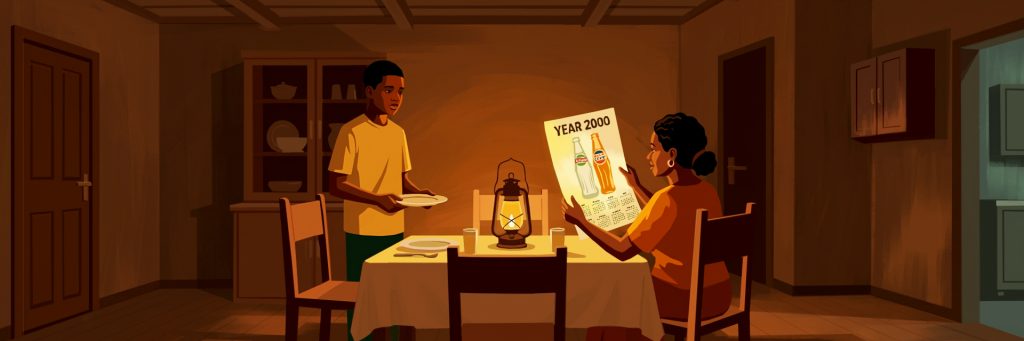
Akure, Nigeria, 1999 January: My new guardian was a performer of miracles. A pastor whose anointed touch could heal sicknesses.…
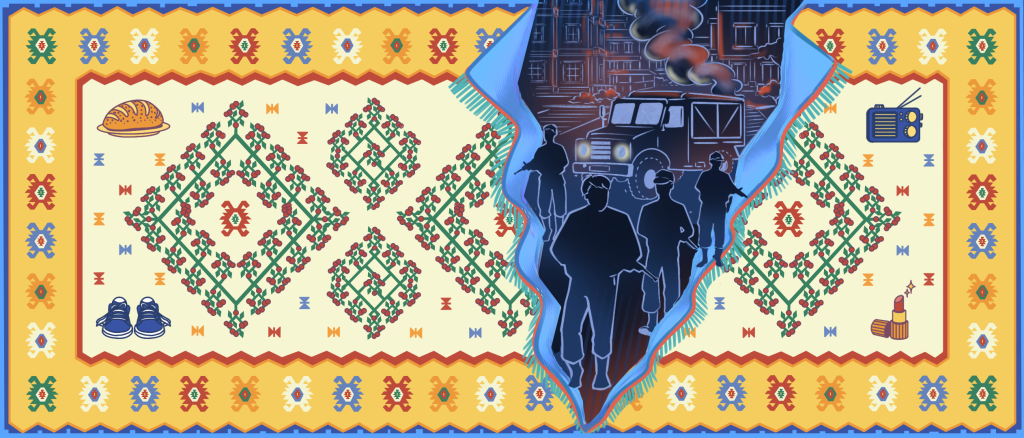
“There are no innocents; there are only those who have not yet suffered.” —Ivo Andrić, The Bridge on the Drina…
Sign up to receive new pieces of writing as soon as they are published as well as information on competitions, creative grants and more.