
Arewa Girls
We were girls once. The girls you once saw hawking on the streets of Arewa—selling awara, wainan rogo, dan wake…
The online magazine of new writing from around the globe
4 September 2026
Bitter Water Village woke to a murder of cockcrows after weeks of pitiless rain, ushering a flood-stink of ancient earth and shit through the hutong.
The eaves of Wei Yoon’s house hung crooked, the roof dribbling rust-brown rainwater. With the yoke and the two bamboo pails, she stepped into the thinning drizzle.
Old Cross-eyed Kang squatted by the well, oil lantern nestled on the stonewall. He studied her as she approached—pity mixing with something else. His gaze dropped to her chest before climbing back to her face.
Wei Yoon clutched her tangzhuang at the collar.
“Your mother?” he croaked.
“Resting,” she said.
Kang spat into the mud. “She’ll need more medicine.”
Wei Yoon lowered the wooden bucket, the rope rasping her palms. She’d learned silence shut a mouth faster than speech.
When she returned, her mother—pale and thin—managed a faint smile from her bed. In the next room, Wei Soon was knuckling sleep from his eyes.
She made porridge for her brother, and brewed tea. She placed the cup on the bedside table and propped her mother’s shoulders to help her drink. Meifeng’s hands quivered as she clasped the cup—the tremor hardening what Wei Yoon already sensed: the household’s weight had shifted to her spine.
*
The rain stopped, but the lull in the house remained bloated, as if waiting for something to break. At lunch, an unstamped packet arrived—creased, rain-blotched, thumbed gray by a hundred hands.
Packets in unfamiliar handwriting had come before, slipped under the door like secrets. But Wei Yoon recognized the twine knot beneath the package. It jolted her. She traced the smudged characters as Wei Soon crowded close and tugged her sleeve. Their mother called out feebly: “Money?” It was all she thought about, aware of the dwindling yuan under her pillow.
“Open it,” her brother said.
She hesitated, loosened the knot, unwrapped a wad of cash in old newspaper. A pattern emerged: each cache came slimmer and slimmer. Buried in its midst was a note—the first from her father in all these months.
The Hanzi fought the paper, every stroke a war. He wrote of work far away, of opportunities, promises. A future together. But omitted place or date. Wei Yoon thought the note was just smoke without heat, and left the packet with her mother.
That night, as her brother and mother slept, she read it again, then lay awake listening to her mother cough the hours away.
*
Neighbor Kang had questioned the ‘postman’, who scolded him for his nosiness. At noon, some villagers bearing fried yam and fish arrived at Wei Yoon’s door—politeness elasticized over curiosity. “So the ghost still breathes,” Toothless Zu said. “Vanishes a year, writes two lines. What kind of father—”
Wei Yoon’s hands clenched. She slammed the door shut.
Her mother discarded the letter on the floor for the wooden car with one wheel missing—her husband’s gift to their son at seven. “Words are cheap,” she cussed.
But Wei Soon clung to belief. “He’s coming back! I know he is.”
Wei Yoon wanted to believe, but remembered the door shuddering, her mother’s stifled weeping that midnight, face turned to stone by dawn.
The letter preceded her to school. Whispers clung to her skin like burrs. Girls hid mouths behind their hands. Boys giggled from corners like sissies. “They say your father’s alive,” a girl called. “Maybe he’ll return rich.” Laughter broke through the corridor. Wei Yoon kept walking.
Laoshi Liang stopped writing on the chalkboard, his gaze steady on her as she entered the classroom and sat down. He waited until the room quieted. “Some things aren’t for jest,” he said, eyes staying on Wei Yoon a beat longer. When the lesson ended and the others scattered, he pressed a folded paper into her palm. It read: Hold your ground.
*
After school, she detoured to Bigmouth Han’s sundry shop. Honed by decades of practice, the old woman missed little.
“Your father,” she said, leisurely counting Wei Yoon’s coins, “always too proud. Men like that would rather borrow from wolves than admit they can’t provide.” She looked up sharply. “If men come asking for him, don’t talk. Hear me?”
“What men?” Wei Yoon asked, baffled.
Han’s face was grave. “Debt collectors—the Black Trousers. They never forget debts.”
Wei Yoon’s jaw tensed up.
From beneath the counter Han produced a book, its spine cracked, cover leached of color. “Take it. Free. Read it when you doubt yourself. And you will. But those men will come.”
Wei Yoon stared at the book, wavered, then took it with a tight nod.
*
Wei Yoon stopped checking the door. No more letters came. And no snow the sky had promised. Just rain. Always rain. Either unremitting drizzle or downpour. Infuriated, she declared her father lying at the bottom of the Yellow River or the Yangtze. It didn’t matter which.
Then, as if she’d blasphemed, the ether ruptured, wind snarled, rain hammered the village in furious waves, the river’s volume changed from murmur to roar.
“The levee!” Kang’s screeched. “It’s breaking!”
Wei Yoon woke her brother and mother. The villagers poured into the hutong. More shouts went up. The river growled louder, grew closer. Windows rattled. The dwellers raced to the hillock.
“Wei Yoon!” Kang barked, thumping her door. “Get out quick!”
She seized her brother’s and mother’s hands, pulled them out into darkness, and climbed the knoll. Behind them, water surged into the hutong, sweeping everything unanchored toward the cliff at the far end. Her mother stumbled along the ridge. Wei Yoon caught her by the waist and pushed her up. “Quick!” she said, the word scraped from deep inside.
On the crest, Wei Yoon wrapped Wei Soon in her arms. Her mother crouched, hacking. Wei Yoon moved close, let her mother lean into her. Not for the first time since her father vanished last summer, Wei Yoon was doing the holding.
By dawn the rain was gone. The flood receded, not before creating filthy puddles in the hutong as if it needed more. The place would again reek of river muck and rot. From the ridge’s peak, Bitter Water Village looked pitiful again.
*
The villagers took two days to clear debris and clean the hutong. The next day, Kang found Wei Yoon at the riverbank, inspecting the pu’er tree—a ritual she performed after every deluge.
“Your mother came asking about your father,” he said, and spat on the ground. “I told her I hadn’t heard anything. I lied.”
Wei Yoon grew dim.
“A loan shark from Shaanxi came looking for him weeks ago. Mentioned your father by name. Then you, Wei Soon, your mother.”
She gripped her left wrist and squeezed it.
“I told him your father was in Heilongjiang. Don’t know if he believed me.” Kang looked her in the eye. “These men—”
“What did he owe?”
“Don’t know. They lend to desperate people. The interest—” He ran a thumb across his throat.
That night, Wei Yoon lay awake thinking about the packages without return addresses, her father’s sudden disappearance. And now danger had a face—from Shaanxi to somewhere north. Hunting him.
*
The next morning, when she woke before dawn to fetch water, she told herself there’d be no time for tears. During the day, she hauled stones with the men to fortify the riverbank. At night she soaked her blistered hands in cold water whilst listening for Wei Soon, asleep in their room.
He’d started waking screaming—tangled in the yurongbei, thrashing like he was drowning. “The water’s coming!”
She’d hold him. “We’re safe.”
His eyes didn’t believe her.
Another night Wei Soon wet himself. Ashamed, he cried. Wei Yoon cleaned him and scrubbed the mattress they shared with rags she burned at dawn, smoke rising like an offering.
“Is Baba dead?” he asked.
She froze. “I don’t know.”
“Will we die?”
“No.”
“How do you know?”
“Because I won’t let us.”
In the main room one evening their mother, ghost-pale, eyes sunk by illness, caught Wei Yoon sneaking her food into her brother’s bowl.
“You’re making him soft!” she chided.
“He’s eight and hungry.”
“Don’t make him weak.”
“Someone has to take care of him.”
“Are you saying I don’t?”
“You’re sick. Someone has to—”
“Has to what—replace me? You’re fifteen!”
“I know how old I am.”
They glared at each other. Wind clattered the eaves. Wei Soon fled to his room.
“So you already understand the world?”
Wei Yoon’s fingernails cut half-moons into her palms. “I know I can’t wait for Baba to fix everything.”
Her mother stormed off.
Wei Yoon’s hands shook. Her mother’s voice had cracked on that last sentence, the way it did when she was fighting tears, not in anger—fear. And now she’d just stripped her mother of her last shred of authority.
She went to the riverbank, sat by the pu’er tree. The village was dark. Somewhere a dog barked. Wei Yoon dropped her head and cried.
*
Late winter should’ve brought icy air. But it was warm. The villagers grew hopeful, chirpier. There were clouds but they were pale, harmless.
All was calm, sleepy, when someone fishing upriver one afternoon came tearing back, shrieking that the river was unhinging.
Wei Yoon was at the well when she heard the shouts. She dropped the buckets and ran. The villagers were already amassed in the hutong, faces pale, mouths agape. Fifty-sixty yards away, rage evicted the river’s normal voice, ranging closer.
She raced to the riverbank, came back wheezing. “Water’s rising fast,” she said between gasps. “Jade Serpent Dam must’ve broken again. We’ve an hour, at worst a few minutes.”
The villagers were horrified. This time they were in deep trouble. Wei Yoon looked at them—at Kang, at the other men, at the women clutching children, jumpy chickens and ducks. Her mother and Wei Soon stood at their door.
“Ropes,” she said, finally. “Shovels, picks, axes, sandbag sacks—bring everything to the riverbank now.”
“Wei Yoon!” Her mother grabbed her arm. “Let the men—”
She pulled free. “No time. Take Wei Soon to the ridge. Go.”
“Wei Yoon—no!”
She was already moving toward the river.
Kang followed, then stopped her. “Are you sure we can do this? Look at us—we’re not young. I wish your father was here; he’d know what to do.”
Wei Yoon stared at him. At all the glum faces. Kang’s words were true. They struck her hard. Then:
“Would you rather be homeless?” she said.
*
At the river, Kang helped tie a rope around her waist, the other end to the old pu’er tree whose gnarled roots gripping earth like fists.
She made the knot her father had taught her when she was nine, his hands ghosting hers in memory. She waded to the bend where the current hit hardest. Water rose to her chest. The rope pulled taut. She nearly fell. Behind her, two men slogged knee-deep, hauled loose sandbags back into place.
Her father had shown her where the current tore worst, what to do when the dike and the riverbank gave way. She saw mud collapsing beneath the willows, the river tearing at the bend. She pushed toward it. The two men followed, the others watched apprehensively from the riverbank.
With shovels and picks they dug up clay, jammed every breach, but not enough: the current was too strong.
“Cut those trees!” Wei Yoon shouted. “Block the bend—stakes first, then logs, then sandbags! Hurry.”
Kang hesitated. “You’ll drown us!”
“It’ll slow the tide. Give us time. Move!”
Mud sucked at their boots. The river growled. Someone cursed. Someone else cursed him for cursing. But they worked, found rhythm, broke into work teams in spite of slipping shoulders and bleeding hands. The rope burned her waist. A sandbag split. Wet clay spattered. But they kept the pace.
Hours later the water hissed and eased off. Silence fell. Tools stilled. Everybody watched in silence, relieved, but tempered by prudence. The dike held. The riverbank too, now stacked with extra sandbags.
Wei Yoon tried to climb the bank. Her legs buckled. She crawled on all fours in mud, breath ragged, and slipped. She fell backward, her head striking a log.
The villagers pulled her higher up on the riverbank. Kang knelt and pressed an ear to her chest. “She’s breathing.”
They carried her home, laid her on the mattress on the floor in her room.
Wei Soon wailed: “Is my sister dead?”
“No, no,” Kang said. “Exhausted. Let her rest. She’ll be all right soon.”
Her mother shepherded them out and shut the door. She changed her daughter into dry clothes and wrapped her tightly in an army blanket. Flashes of Yan’an came back—bodies pulled from rubble, children with empty eyes, women who’d learned that in weakness lay ruins.
Wei Soon stayed with his sister, his hand in hers until he fell asleep against her.
She emerged late the next morning, hunched, pale. The village still stood. The hutong held. Kang came to her with a twig broom, said nothing; merely smiled and nodded.
Wei Yoon looked toward the river. It no longer roared but breathed. The pu’er tree stood on the bank, sturdy as ever.
She walked to it slowly, touched its ageless bark. The rope was still tied there. The knot, too. Her father’s knot. She stood there for a long time, listening to the river burble.
*
The mud dried and the river fell back into its channel. The village began to live again.
Winter bled into spring’s hesitant warmth. The riverbank’s scars healed over with grass. Wei Yoon found steadier rhythms—carrying water at dawn, tending her mother, keeping Wei Soon fed and steady. His hand in hers felt less like burden, more like anchor. Her mother began to walk more, slower but surer. Even the silence between them had softened.
After supper one day, as Wei Soon bathed and his mother washed dishes in the kitchen, a knock came at the door. Gentle. Almost apologetic. No one in the village knocked like that.
Wei Yoon, seated on the main room’s floor, jumped.
A second knock followed, just as soft. And a third, softer still.
Wei Yoon thought whoever it was would give up and walk away.
Then a voice muffled through the wood, tentative: “Wei Yoon?”
Her heart caught. Eyes glazed over. She grabbed her left wrist, squeezing it.
In the kitchen, the sound of water stopped.
“It’s me,” said the voice.
Wei Yoon shivered.
“Wei Yoon?”
For a moment it meant nothing; just sounds, syllables. Then it crashed through her—the word she’d buried months ago.
She stood up, slowly, legs shaky. She moved to the door as if wading through deep water. She opened the door—enough to peek.
He stood in shadow, rags hanging from gaunt shoulders, face dirt-caked, cheekbones sharp under grime, broken shoes. Looked like the beggars who passed through here nameless and forgettable.
But the voice …
“Wei Yoon.” A whisper now. Tenuous.
She knew the voice. Dreams had carried it to her—dreams that’d left her angry on waking.
Wei Yoon’s throat dried up, the floor tilted. She gripped the door, steadying herself.
“Wei Yoon … it’s me. Wang Wei Qiang.”
“Wei Yoon,” her mother called from the kitchen. “Who is it?”
“Wei Yoon, it’s really me … your father. I’ve come home.”
Slowly—distrustfully—she opened the door a crack more, then, half-heartedly, wider.
He stepped inside sideways, like a crab, clutching a canvas sack to his chest; the kind he’d carried to work sometimes. He closed the door.
His face was hollow. Time, fear, shame had eaten it away.
Up close she could see his eyes, red-rimmed and begging.
The cheap, medicinal, choking taste the village brewed and sold to nearby towns and villages filled her head and rose in her mouth.
Her mother stood in the kitchen doorway, staring at the man before her, a hand bracing the frame.
He gawked at her.
“You!” she said. One word. An entire year compressed into three letters.
The bathroom door burst open. Wei Soon ran past his mother and stopped.
“Baba?” It came out like a question, as if unsure what the word meant anymore.
“Wei Soon!” the man’s voice broke. His hands extended toward him, uncertain and desperate.
The boy turned to his sister, eyes wide, as if seeking her permission, seeking proof this was real.
Wei Yoon nodded once. Barely. Her face gave nothing else.
Wei Soon, face bright as the summer sun, launched himself forward, crashing into his father’s arms. “Baba! I knew you’d come home. I just knew!”
Their embrace was raw—joy tangled with something darker, something that felt like grief.
Wang Wei Qiang looked up over his son’s shoulder. He found his daughter—and a stranger.
Her eyes weren’t the ones he’d left behind. Not soft, not forgiving, but cold and fixed, like river stones worn smooth by current.
Wei Yoon turned, walked to her room, and shut the door she hadn’t closed since the night he disappeared.
*
That night, Wei Qiang slept in the main room under an army blanket, the canvas bag his pillow, breathing slow and rough. Wei Yoon lay awake in her room, her brother pressed against her side.
Wei Soon had talked himself into exhaustion, recounting everything their father had missed—the floods, the village, school, old Kang forever spitting. Everything. “He came back,” Wei Soon muttered into the darkness. “I told you he would.”
“Sleep,” Wei Yoon said.
But she didn’t sleep.
Near dawn, she heard her father rise. Heard him move toward the front door. Her body tensed. He’s leaving again.
But he didn’t leave.
Wei Qiang sat at the open door. A moment later, the sound she’d dreaded came—low, broken.
Wei Yoon pulled the yurongbei over her head and squeezed her eyes shut.
*
Meifeng woke at dawn, as always. But this morning the house sat different. Cumbersome. Her husband was back, as though the year had been nothing more than a long market trip.
She rose, wrapped herself in the heavy coat Wei Yoon had procured last winter. She saw Wei Qiang but paused at her children’s door, opened it a peep, saw them asleep, Wei Soon curled against his sister’s side. Meifeng pressed her palm flat against the doorframe, then moved to the kitchen.
Wei Yoon opened her eyes. She’d heard her mother’s footsteps at the door, refusing to read anything into them.
Minutes later, she heard voices in the main room. Low, careful. Wei Yoon couldn’t make out the words, but she knew the tones: her mother’s voice steady, father’s broken.
Wei Yoon dressed quietly and slipped out the back door to draw water in the gray morning light. The village was still asleep. She thought of staying there a while, but she returned, softly set the pails down in the kitchen. Through the kitchen doorway she saw her father, still sitting at the door, head in his hands. Her mother stood behind him, a cup of tea in her hand, another cup sitting beside her father. Despite her illness, her mother’s spine looked impossibly straight—perhaps remembering the woman she’d been years ago.
Wei Yoon snuck into her room and stood just inside her door, listening.
“I’m surprised you’re still here,” Meifeng said.
Wei Qiang didn’t look up, didn’t say anything.
“The debt,” Meifeng said. “Is it settled?”
“Yes,” he said after a short pause.
“How?”
“It’s settled.”
Meifeng understood Wei Qiang’s reluctance, his diffidence, galling as it was.
“Wei Yoon saved the village,” she said. “During the flood. She commanded the men. They listened to her. A fifteen-year-old girl.”
Wei Qiang’s face rode between pride and worry.
“She doesn’t need you,” she said. “None of us do. Not anymore.”
Wei Qiang nodded slowly.
“Why did you come back?”
He looked at her, really looked, his face wet. “Because I’m a coward. Cowards always come home.”
Meifeng was silent. Then: “You think coming back makes us forget? Wipes everything clean?” She sipped her cold tea. “You can stay,” she added, “but you’ll earn it. Every day. Understand?”
“Yes.”
“And Wei Yoon—she’ll come around. Or she won’t. That’s her choice, not yours. Nor mine. Don’t push her. You don’t demand forgiveness. You just … be here. If you can manage that.”
“I can.”
“Finish your tea. Then you can start with the roof. It still leaks in the back corner.”
*
Early the next morning, Wei Qiang stood by the pu’er tree, watching the river run.
“It held.”
He turned.
Wei Yoon stood three yards away. Might as well have been three li, her arms crossed over her chest.
“During the flood, I tied the rope to it. Used the strongest knot you showed me.”
He nodded. “I can see.”
The river moved past them, metallic silver, indifferent, not caring what it carried away—houses, promises, fathers.
“They must’ve repaired the Jade Serpent dam,” he said. “How long will it hold?”
“Why did you leave?”
He was quiet, then shook his head. “Your mother was dying—”
“She’s still dying!”
Neither spoke. The river whispered beyond the trees.
“I needed money for your mother’s medicine. I borrowed from the wrong people.”
“The gaolidai?” Wei Yoon’s jaw tightened.
He nodded, avoiding her eyes.
“They threatened the house. Threatened you, Wei Soon, your mother. I thought if I left, they’d follow me instead.”
“They came anyway.” Wei Yoon’s voice was flat. “Kang sent them north.”
“When?” Wei Qiang’s chest hurt, legs teetering.
“Months ago.”
He closed his eyes.
“The gaolidai,” Wei Yoon said. “Is he dead?”
Wei Qiang looked down.
“You’re ex-army. Did you kill him?”
He turned to watch the river, shadows falling across it in places.
“Is that why you’re back, because it’s finally safe?”
The words hung between them like smoke. He didn’t think a child, any child, needed to know grisliness. He was expecting anger, accusations, tears, yes; not this calmness, this hardness. Not from his fifteen-year-old daughter.
“It’s over,” he said.
“Nothing’s over!” she snapped. “You think because you came back, because the debt’s gone, we just forget?” She squeezed her left wrist. “You left us. No money. No explanation. In the middle of the night. I’m—” She stopped. Breathed. “I had to raise your son, I had to save your house … I had to become someone I didn’t want to be!”
Wei Qiang started crying. “I’m sorry.”
“Your sorry is a year too late. If you’re staying, stay for Mama. For Wei Soon. Not for me… Are you staying?”
He nodded.
“Say it but mean it too!”
They stood in the growing light. The pu’er tree’s shadow stretched across the riverbank like a series of meandering paths.
“Are you staying?” she asked again.
Wei Qiang wanted to make promises. To swear on everything holy. On his mother’s grave. But his daughter had learned not to trust words.
“I don’t know how to prove it,” he said, “except by staying.”
Wei Yoon watched him for a long moment. Then she turned and walked away, leaving her father by the tree where she’d tied the rope, where his knot had held when everything else gave way.
*
In mid-spring Wei Qiang worked on the house with purpose. He added a room for Wei Yoon, built a shelf for the books Han and Teacher Liang kept giving her, installed an east-facing window she’d wanted, reinforced the roof and straightened the frame.
Meifeng remained careful: she neither froze him out nor warmed to him. Wei Qiang accepted it. Only Wei Soon seemed untouched by the year. He followed his father everywhere, chattering about school, the floods, everything. Wei Qiang soaked up every word.
Late one afternoon, Meifeng appeared with tea. She watched him measure and cut boards. “You’re building it bigger than I expected,” she observed.
“Wei Yoon asked for space for a desk. For studying.” He looked at Meifeng. “She wants to present for the provincial school test.”
Meifeng nodded. “She’s always been smart.”
“Strong too. Like you were. In Yan’an.”
Meifeng’s face knotted. “I’m not that person anymore!”
“Maybe not. But she is.”
Wei Qiang set down his saw and sipped his tea. “I’ve been thinking. If she gets into a provincial school, she’ll need money—for books, clothes, things like that. I’ve been talking to the factory in town. They’re hiring foremen. Good wages.”
Meifeng thought, then asked: “You’re staying, then?”
“If you’ll have me.”
Meifeng drank her tea. “I heard what happened to the gaolidai.”
Wei Qiang began inspecting his implements, fiddling with one, then another.
“Kang has a cousin in Shaanxi. She sent word.” She looked at him. “They found him in a piggery, suitably. Throat cut. His brother’s too. Both half eaten away.”
“I didn’t—”
“You say you didn’t.” Her voice was brusque. “But you know who did. You ran from debt but also from that bloody mess. Didn’t you?”
Wei Qiang glared at her, snatched the handsaw. It strummed. Meifeng flinched. He ran a thumb over its teeth. They were dull.
A long minute passed between them.
“I’m glad he’s dead,” Meifeng said. “Got what he deserved.” Her voice was even. She stared at the rough wood for the new desk, her hands clasped, knuckles white as her face.
He pushed the saw away from himself, from his wife. She’d fled Yan’an young, seen terrible things during the war, watched her mother die from a Guomindang bullet. She’d learned what Wei Yoon was learning now—soft things don’t survive.
“I would’ve done it myself,” Meifeng added, “if I’d had the strength. To protect my children.” She met his gaze. “I’m not a good person, Wei Qiang. I’m practical. Right now, it’s practical to have you here. You’re useful.”
“Is that all I am—useful?”
She considered this. “For now. Maybe always. I don’t know yet. But I’m too old, too tired, and too sick to hate you properly.” She collected her cup and his and turned to leave. “I waited, until the waiting itself rotted. Love is easy, Wei Qiang. It’s staying that’s hard.”
The handsaw’s rasp returned, sawdust sweetening the air. From the front door, Wei Yoon looked out at the darkening hutong. She heard everything—her mother’s words, her father’s silence.
A rooster called too late.
*
A week before summer’s end, she left for the provincial school in Beijing. The decision she made, months ago, was hers alone.
The villagers gathered to see her off—not ceremonially; that would’ve mortified her.
Han gave her a packet of dried fruit. “Eat slowly,” she said, smiling. “You don’t want a rotten stomach.”
Kang slipped a pouch of coins into her palm, contributions from the villagers.
Laoshi Liang handed her a set of books wrapped in red cloth. “Make yourself very proud,” he said, and stepped back.
Wei Soon clung to his sister. “Don’t go!” he sobbed.
“I have to.”
“You don’t have to. Stay with me. I need you.”
“I can’t.”
“You’ll come back soon—tomorrow?”
Wei Yoon looked at him. She could lie. She could promise. But she didn’t. “I don’t know.”
Wei Soon’s face crumpled. He ran howling into the house.
Meifeng stood outside the door, wrapped in the heavy coat, suppressing her cough. She looked at her daughter. Her smile quivered like a flickering candle. Wei Yoon saw something else in her mother’s face she’d never seen before: a softness, something distant and familiar at once.
“You’re like me,” Meifeng said. “Before.”
“Before what?”
“Before I came to this village. I left Yan’an swearing I’d never go anywhere tiny or poor. And here I am.”
Wei Yoon looked down. “I’m not coming back.”
“I know.”
Meifeng pressed a cloth bag into her hand—notes and coins, heavy and warm. “I’ve been saving. Since before your father left. Just in case.” She tapped her daughter’s left hand twice, then squeezed it lightly, as if memorizing the touch.
Wei Yoon stood motionless.
“Go,” Meifeng said. “Don’t look back. Not even at me.”
Wei Qiang approached with a box. “I made this for you,” he said.
Inside, a frieze of a pu’er tree he’d carved: bright red roots, dark trunk and branches, and lush evergreen leaves.
“There’s something else inside,” he said.
She looked: a folded piece of worn paper.
“I wrote it the night I left. I never sent it. It’s yours, if you want it. Burn it if you don’t.”
Wei Yoon looked at it a moment longer, not retrieving it, replaced the lid, and looked at him.
“Wei Qiang,” she said.
He curled up inside, needing his daughter to call him Baba again.
“Thank you for coming back … even if it was too late.”
His shoulders slumped.
She put the box in her knapsack, fixed it on her back, picked up the old suitcase Kang had given her and, without looking up, started walking away.
Wei Soon stood in the doorway, sniffling, the toy car with three wheels in his hand. Wei Qiang hung his head, eyes clouded. Meifeng covered her trembling mouth with her fingers. She wanted to call out, but the word daughter stuck behind her teeth.
Wei Yoon passed through the hutong’s sandbagged entrance, knowing the floods would return sooner or later. Before she disappeared down the hill toward the town, toward a future she’d make, she almost turned. But the moment passed, and with it the last echo of Bitter Water Village.
We were girls once. The girls you once saw hawking on the streets of Arewa—selling awara, wainan rogo, dan wake…
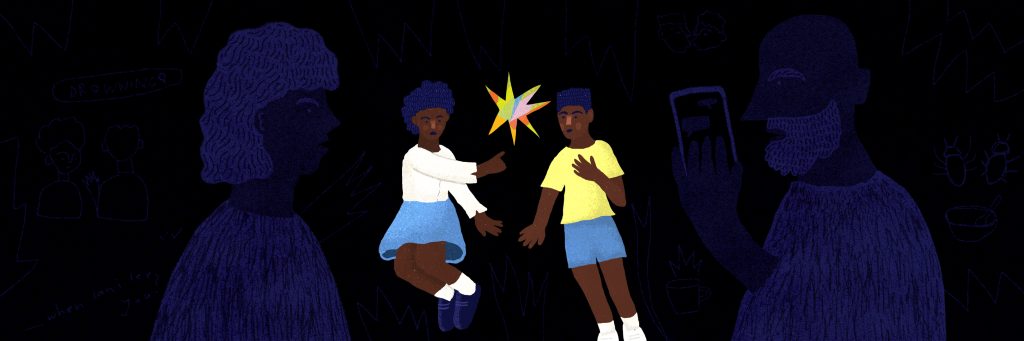
The new game Oyin and I invented is called Shock-Me-I-Shock-You. We play it whenever our parents aren't around. Often, Daddy…
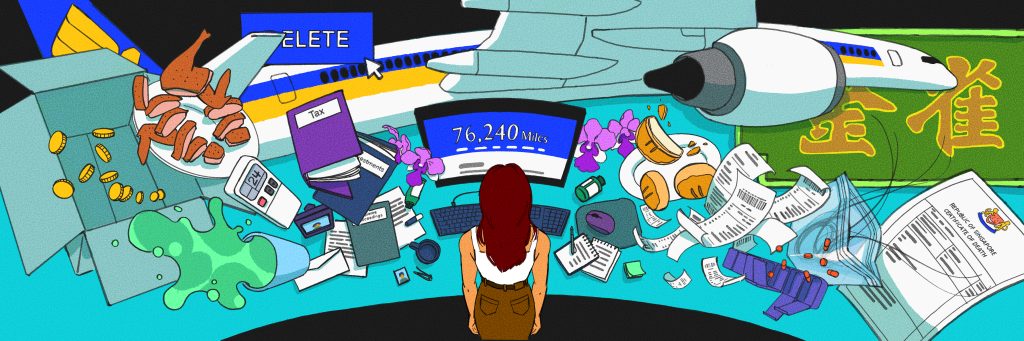
The KrisFlyer miles of a dead person cannot be redeemed. The woman on the hotline said it as if she…
Sign up to receive new pieces of writing as soon as they are published as well as information on competitions, creative grants and more.