
Arewa Girls
We were girls once. The girls you once saw hawking on the streets of Arewa—selling awara, wainan rogo, dan wake…
The online magazine of new writing from around the globe
17 August 2026
Singh sat on the bench on Platform Three at Amritsar Junction. Nine years of waiting had carved his outline into the wooden slats. His tan suit, pressed each morning by his wife despite his protests, hung loose on a frame that grew thinner with each passing train.
The 4:30 to Pathankot was the next one in.
‘Chai bolo chai! Garam, garam chai!’ The chaiwallah’s hoarse voice mixed with the porters’ shouts. A child cried. A woman haggled over bananas near the stalls. A transistor down the platform was playing the cricket commentary, India 48/2, Tendulkar 32 not out.
He pulled a letter from his inner pocket. The paper was soft at the folds. His spotted fingers shook as he unfolded it. He knew every word. He still read it.
Papaji, Sat Sri Akal!
I reached safely. The training is very hard, but your puttar is managing. You always told me that life will test me, but a true Punjabi never backs down. I remember your words every morning when the bugle sounds. The boys here are from all over the North, from Amritsar, Ludhiana, Himachal, Haryana.
We wake at four in the morning, sharp. First we run for an hour, and haye rabba, in the first week I felt as if my legs would give out. But slowly, slowly, this body is becoming strong like iron. Then comes the parade drill, turning left and right on command until our movements become one. After that comes the weapons training, where they teach us to handle the rifles. Then more drill, until our uniforms are soaked with sweat. By evening, Papaji, we are so tired that we can hardly keep our eyes open. But I am happy. This is what I wanted from the time I was a small bachcha. I want to serve the motherland and uphold the honour of our Sikh heritage. Whenever I feel like giving up, I think of you and Mataji, of our pind and our mitti.
I will visit you soon. Tell Mataji not to worry. Her puttar is becoming strong. Look for me on the trains, with my uniform and rifle. Your blessings are my strength.
Your loving son,
Daler
Waheguru meher kare!
Singh folded the letter carefully along the same creases and returned it to his pocket. The platform was crowded now. His eyes searched the crowd for one face. Every soldier who passed made his heart skip. But it was never his son.
‘Singh Sahib,’ a voice said.
He looked up. It was Sharma, the stationmaster, his uniform stretched tight across his middle, the bottom button undone since last Diwali, when his wife’s pinnis defeated his waistline.
‘Are you still waiting?’
Singh nodded.
‘Go home, Sahib. Your wife must be waiting.’
‘She knows where I am.’
Sharma walked away. One by one they stopped trying to convince him, his wife and his neighbours and the doctor who said the pollution would kill him. But how could he explain it to any of them?
The train screeched to a halt. He stood and straightened his tie.
Maybe today.
The doors opened. Passengers poured out. He scanned the faces, looking for khaki, for a rifle. A few young servicemen stepped down, boys really. But none of them were Daler.
The platform slowly emptied. Singh sat back down.
Tomorrow, he thought.
The urchins approached. They knew his routine. He pulled out coins, and they scrambled, their dirty faces breaking into grins. One boy of seven lingered.
‘Babaji, you sit here every day. You looking for someone?’
‘My son.’
The boy tilted his head.
‘He playing hide and seek? I can help look.’
Singh looked at the empty tracks running into the distance.
‘He’s very good at hiding.’
*
The house looked exactly as it did the day Daler departed, frozen in March 1991. The steel tumbler he drank his lassi from stood washed and in its place every day. On the wall the calendar showed Guru Nanak, his calm face faded to pale blue and washed orange. Amarjeet refused to change it. She would say, ‘When he comes back, everything should be as he remembers.’
She was standing over the stove when Singh entered. White hair pulled back, dupatta draped over one shoulder.
‘The dal is cold,’ she said.
‘I’m not hungry.’
‘You’re never hungry anymore.’
He sat at Daler’s homework table. The wood was scarred from years of use. Now he traced the deep gouge with his finger where Daler had carved his initials at 10. Singh was furious then.
Amarjeet brought him a plate anyway.
‘Sharma and his wife came by. They are worried about you.’
‘Let them worry.’
‘You sit there all day, breathing that filthy air. What if you fall sick?’
‘I’m fine.’
‘It’s been nine years.’
‘So? Some postings run long.’
‘The army would have informed us if something happened to him out there…’
‘He wrote to us. He said he would come.’
She reached for his hands. Hers were rough from years of housework, the skin papery, one finger crooked where she broke it trying to mend the roof alone while he sat at the station.
‘What if he never comes back?’
He pulled his hands away.
‘Don’t say that.’
‘We could hire a private detective.’
‘No.’
‘He told me to wait at the station. So I will wait.’
She stood and cleared the untouched food.
‘Then I’ll wait too. For you to come back to me.’
In bed they lay apart. The sound of Nukkad on Doordarshan and the clank of dishes from Khanna’s kitchen came through the thin walls.
‘Do you remember how proud he looked in that uniform?’
‘Like a prince,’ Singh said.
‘I pressed that uniform three times to get it right.’
‘It was perfect. So was he.’
‘Is,’ she corrected. ‘He is perfect.’
They fell silent. A distant train whistled outside. Singh’s body tensed.
‘Sometimes I think I see him in the market,’ Amarjeet said. ‘Some boy will walk a certain way, turn his head, and for a moment…’
She took a breath.
‘But it’s never him.’
Singh closed his eyes. He saw Daler every day, in every young man with straight shoulders.
Tomorrow, he told himself, and slept.
*
Daler hauled himself into the goods wagon as the train was moving. He found the rungs easily. Inside lay rows of textile crates, and he wedged himself between them. The smell hit him first, rotting vegetables from the last cargo, the reek of his own unwashed body.
He watched from the shadows as his father left the platform every evening. He would walk toward the bench, only to stop at the pillar. Thirty-one steps lay between them.
The train gathered speed. He remembered the first ride, nine years back. He sat in a proper compartment then. The other recruits laughed and traded stories. Someone offered him a kulcha from a tiffin box.
Eight weeks. That was how long he had lasted in the training.
During the night exercise, crawling through mud while machine guns fired overhead, he froze and then bolted upright in panic. The training round caught him in the chest and knocked him flat. He felt his bowels loosen.
The others pretended not to notice.
The sergeant pulled him aside.
‘Go home. You lack the mental fortitude to be a soldier. Find another way to serve.’
He came back. He stood at the station entrance, bag in hand, rehearsing the words, ‘Papaji, I tried.’ Then he saw his father on the bench in the tan suit, watching the trains. A group of neighbours passed, and he heard one of them say, ‘Look at Singh, waiting for his hero son.’
He turned around and walked off into the city.
That first week he slept in the gurdwara. He found day labour loading trucks, then cleaning toilets at the bus stand. But the dharamshala rent was 20 rupees, food another 10. One night, dizzy with hunger, he saw an abandoned bag on the 11:47 train, sitting there with nobody watching.
Just once, he told himself.
The second time was easier.
The wagon door opened. His partner, Munna, slipped in, humming Chaiyya Chaiyya under his breath. He always hummed that Shah Rukh Khan song. Daler once asked him why. ‘Because we’re dancing on trains too, yaar,’ Munna said, grinning.
Tonight he wasn’t grinning.
‘I saw your old man again.’
Munna pulled out a beedi.
‘My old man used to wait too, at the factory gates. He waited there until his heart gave out.’
He lit the beedi, and the orange glow caught the scar across his knuckles from a knife fight the year before.
‘How long are you going to keep this up? He’s going to die on that platform one day.’
‘Shut up.’
‘Talk to him or leave.’
‘I said shut up.’
Munna shrugged.
‘Found a good score on the Navyug Express. A laptop. We can hit it when it stops at Ludhiana.’
Daler shut his eyes. His hands shook when he picked pockets now. Just yesterday he vomited after lifting a briefcase off a sleeping businessman.
They would reach Ludhiana in a few hours, then turn back toward Amritsar.
Munna was snoring now, the beedi slack between his fingers. Daler crushed it under his heel. He could see the stars through a gap in the door, the same stars from his childhood. His father used to point out the constellations and tell stories of warriors. ‘That’s the bow of Arjun. A true warrior’s strength comes from his dharma, puttar. The weapon is only iron.’
Tomorrow Singh would put on his suit, go back to the bench and wait for a ghost too cowardly to show his face.
*
Singh wiped his forehead with his handkerchief. The 4:17 pulled out a few minutes before.
The Golden Temple Mail would not arrive until 5:15. Singh knew every train by heart. The Sachkhand Express ferried pilgrims down to Nanded, and the goods trains rattled through at midnight, hauling wheat for the rest of the country. He could recite the entire 1999 timetable.
Around him, women in bright phulkari chunnis argued with a porter. The loudspeaker crackled in Punjabi, Hindi and broken English. A radio played a Gurdas Maan song about sons who leave for foreign lands.
Singh felt a fist closing slowly behind his ribs. He pressed his palm to his chest, and a burn spread beneath the thin cotton. Not now, he thought. The next train might bring him…
It was like 1984, when everything burned. His father died the same way, his heart giving out. The doctor at Civil Hospital said the weakness ran in families. Singh had told him Punjabi hearts were stronger. Now his left arm went numb.
His vision narrowed.
The platform seemed to tilt. The letter slipped from his pocket, and his knees buckled under him.
‘Singh Sahib!’
The chaiwallah dropped his kettle.
‘Ramu! Rafiq! Come quickly!’
Harpreet inherited the tea stall from his father. He was 17 when Singh began his vigil. Now he was 26, with three children and a permanent stoop from the heavy kettle. He knew which beggar was a rich man’s son fallen to drugs, which ticket checker took his cut. He knew Singh’s story better than almost anyone.
The fruit vendor abandoned his scales, and bananas rolled across the platform. The cobbler dropped his needles. The pickpocket went still. They gathered around him.
After Operation Blue Star, when trust ran thin, and every stranger might be an informant, the platform vendors learned to protect their own. They hid one another during police sweeps and shared their earnings when business went bad. Singh, with his government pension, helped them in small ways. He bought chai at the same hour each day and got a shoeshine every week for shoes that never needed it.
‘Let’s take him to the hospital, quickly,’ the paan seller panted.
Rafiq fled Lahore during Partition as a child. He understood waiting for people who never came. His uncle had promised to follow within a week. That was 52 years ago. He stuffed betel leaves now, his fingers stained red from the kattha, like the blood from that crossing.
Daler moved first.
The vendors hoisted Singh onto a luggage cart. The wheels squeaked. Daler took one corner. He saw his father’s chest barely rise.
They pushed through the evening crowd, past the STD booth where people queued for costly calls to Canada, on through the auto-rickshaw stand where drivers sat playing cards.
‘You know him?’ the chaiwallah asked, noticing Daler’s worried face.
‘I…I see him here sometimes.’
The Guru Teg Bahadur Hospital was three streets away. The emergency ward was packed with farmers poisoned by pesticide and addicts shaking through withdrawal from the synthetic drugs that flooded in across the border.
A young doctor checked Singh’s pulse. His badge read: Dr Kulwinder Singh, MBBS. Betadine stained his coat.
‘He’s had a heart attack,’ he said, looking up. ‘Who’s the family here?’
The vendors looked at one another. Harpreet spoke up.
‘I know where Singh sahib lives. I’ll get his wife.’
The house was in the old city, just past the Golden Temple, in the narrow gullies where houses pressed together, and the cable wires tangled overhead.
Thirty minutes later, Amarjeet burst through the doors with her white dupatta flying. She went straight to Singh’s bed and grabbed his hand.
Singh lay propped against thin pillows. His breathing was laboured but steady. The doctor’s face told her the rest. Hours, perhaps a day.
‘You old fool,’ she whispered.
The vendors offered what little money they had for the medicines, then left.
Daler stood frozen outside the door. He pressed himself to the wall, his cap pulled low.
He should leave. There was every reason to go. But his father’s face held him.
Amarjeet sat beside the bed, humming an old lullaby.
Singh stirred. His eyes opened and his lips moved. Amarjeet leaned closer.
‘Daler?’
His father’s voice came clear and sudden, and it made him jump. But Singh was not looking at the door. His eyes were fixed on the empty corner, a smile on his face.
‘Look, Amarjeet.’
Singh’s voice came out stronger than it sounded in years.
‘See how handsome our boy is now.’
Amarjeet turned to the corner and saw nothing but peeling paint and a medical chart. Her face crumpled.
‘Sardarji…’
‘See his uniform? It’s so smart.’
Singh raised a trembling hand, pointing.
‘Three medals…no, four. For bravery. I knew it. I always said my puttar would be a hero.’
Daler pressed his forehead against the doorframe.
Four medals. His father imagined four medals for a son who could not last eight weeks in the training, a boy who wet himself in the mud and then grew into a thief.
‘He says he was away on classified missions, that writing was impossible and a visit even more so. But he never forgot us. Even out there, he thought of his Papaji and his Mataji every day.’
Amarjeet looked at the corner, then at her husband’s face.
‘Yes, I see him too.’
‘You do?’
‘He stands so tall now, strong, the way you were at that age.’
She squeezed Singh’s hand.
‘Tell him we are proud of him.’
‘He knows. He says he kept watch over us, even from far away.’
Daler slid down the wall and sat on the cold tiles.
‘He’s telling me about Kashmir, the mountains there, the Northeast where the jungle grows so thick you can’t see the sky, the desert in Rajasthan where the sand sings at night.’
‘All those places,’ Amarjeet murmured. ‘Our brave boy.’
‘He says the letter was all he could send. Security reasons. But he carried our photograph everywhere, showed it around to the others in his unit, told them about his Papaji who pushed him to be better and his Mataji who makes the best sarson ka saag in all of Punjab.’
A nurse walked past and glanced at Daler. He stood and walked to the window.
When he returned, Amarjeet was speaking.
‘Puttar, your Papaji is very tired. He waited such a long time for you. Perhaps it’s time the two of you rested.’
Singh’s medication was pulling him under.
‘He says he is sorry for keeping us waiting so long.’
‘There’s nothing to forgive,’ Amarjeet murmured.
Singh’s eyes closed. His breathing slowed and went peaceful.
Daler walked away and left his parents with their better son.
*
The cremation ground at Sultanwind was in mist.
The fire crackled. White-clad figures filled the space between the pyres and the gate: railway workers in pressed uniforms, platform vendors who closed their stalls for the morning, neighbours who long ago stopped speaking to the Singhs and came anyway. The fruit seller brought his two sons. The chaiwallah’s wife stood with her daughters. Even the pickpocket was there, his head covered.
Daler stood behind the shamshan ghat’s wall, watching through a gap in the bricks. He wore a white sheet from a roadside vendor. But he couldn’t cross those final 50 metres.
The granthi recited the Kirtan Sohila; the day of my wedding is fixed; come, my companions; pour the oil upon the threshold. They were the words Daler first heard at his grandfather’s funeral, when he was seven and did not understand why everyone around him wept.
Amarjeet stood at the pyre’s edge, staring into the flames with dry eyes. Her brothers flanked her, and still she stood alone in her grief.
The eldest uncle performed the last rites, circling the pyre with a torch. The duty fell to him, with no son to do it.
‘He was a good man,’ someone said near Daler’s hiding place. It was two old railway workers. ‘He sat on that bench like a soldier at his post.’
‘We’re all waiting for something.’
The fire burned higher. It took the body of Harpal Singh. The smoke rose thick and black, then paled and was gone.
The ceremony ended. The people went to the gurdwara for the Akhand Path and to the langar where they would trade stories of Singh’s better days.
Daler wanted to follow them. Instead, he walked to the station.
It was early, before the morning rush. Platform Three lay nearly empty except for a sweeper pushing his broom in slow strokes. The bench looked wrong without Singh. Someone had left marigolds there.
Daler wanted to sit there once to feel what his father felt. But he could not move.
The 6:45 pulled in. A young soldier came in crisp khaki, a rifle slung across his shoulder. He passed the bench without a glance.
*
She stayed in bed the first day. Singh’s glasses lay on the side table and his slippers by the door.
By the next day she was cooking. Dal in the pressure cooker, roti on the tawa. She made two portions and caught herself setting out two plates.
On the third morning she woke at 6:30. Without thinking she pressed Singh’s tan jacket, then could not remember why she was holding it.
She put it on. It smelled like him and train diesel. She found the letter in the pocket, unfolded it, read it and folded it back along the same creases Singh had made.
She went to the station.
She meant to see the bench, to say goodbye. But when she reached Platform Three and saw the wilting marigolds where he used to sit, her legs gave way. She sat down.
The 8:47 arrived. The doors opened and passengers flowed out. She didn’t leave.
The chaiwallah noticed her first.
‘Bhenji, you should be resting. The mourning period…’
‘Singh Sahib sat here every day,’ she said. ‘Someone should wait.’
The chaiwallah brought her tea in a kulhad.
Word spread among the vendors. The fruit seller left two bananas at her side; the paan seller and the cobbler came with their condolences.
Daler watched from the pillar.
The 4:17 arrived.
Amarjeet scanned the passengers stepping down with the same desperate hope Singh had once carried. When the platform emptied, she sat back down.
‘He’s not coming, Bhenji.’
‘He came for Singh Sahib in the end.’
Days became weeks.
Amarjeet arrived each morning at 8:47 and left after the last evening train.
Sometimes Daler watched her read the letter, her lips moving silently over the words, then slip it back into the pocket and go on watching the tracks.
One evening, Amarjeet spoke to the empty space beside her.
‘I know you’re watching, puttar. Somewhere. A mother knows. Come when you are ready. I will be waiting.’
Daler sank against the pillar.
His throat closed and his eyes burned. He wanted to run to her and end her waiting. But he was not the son she waited for. That son had medals on his chest.
Weeks turned to months.
One evening, as Amarjeet turned to leave, the old letter slipped from her coat and fell behind her, unseen.
Daler saw it. The letter came to rest near the bench, tucked against the rear leg, safe from the breeze.
If the letter blew away, Amarjeet would lose her last link to him, and she might not survive.
Daler stood paralysed. The platform stretched out before him. His legs felt uncertain under him.
He heard his father’s voice echo from the bench. A true warrior’s strength comes from his dharma, puttar. The weapon is only iron.
He took one step, then another, until he walked all 31 of them, for the first time in nine years.
The letter lay there. He picked it up and read his words and promises again.
He sat down on his father’s bench and ran his hands along the slats, feeling the hours and the days and the years worn into the grain.
Daler folded the letter one last time but folded it differently now, into new creases of his own. Then he walked out through Amritsar Junction in full light, no longer clinging to the pillars and the corners, out through the main entrance, towards home.
Behind him, the bench at Platform Three sat empty.
It would not stay empty for long. The trains would keep coming, and others would come to wait.
We were girls once. The girls you once saw hawking on the streets of Arewa—selling awara, wainan rogo, dan wake…
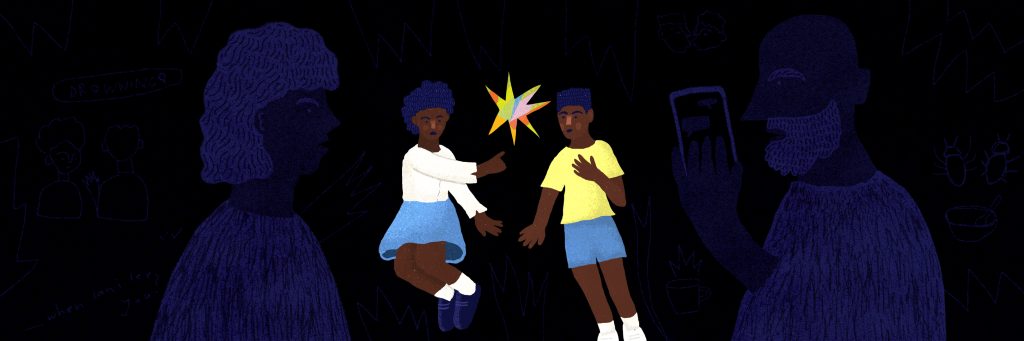
The new game Oyin and I invented is called Shock-Me-I-Shock-You. We play it whenever our parents aren't around. Often, Daddy…
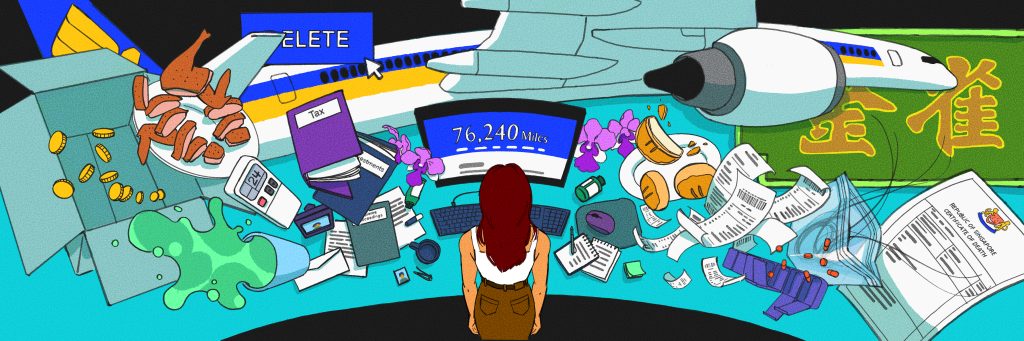
The KrisFlyer miles of a dead person cannot be redeemed. The woman on the hotline said it as if she…
Sign up to receive new pieces of writing as soon as they are published as well as information on competitions, creative grants and more.