
Arewa Girls
We were girls once. The girls you once saw hawking on the streets of Arewa—selling awara, wainan rogo, dan wake…
The online magazine of new writing from around the globe
17 August 2026
This piece includes references to suicide that some readers may find distressing.
We had spent a long time getting ready that afternoon, Sis and I, and by the end of it all we hardly recognised ourselves. My sister, two years younger, wore a blue dress with a wide silk ribbon for a belt; the ribbon was soft, stiffening at the edges where we tied it. Her hair was newly brushed, so the fluffed mound at the back of her head was thinned of tangles, and hung smooth – alien in its neatness. My dress was green, its two frills edged with red piping, one circling above the other. Our faces, washed clean and pink, stung in the freshness of the air, and we looked at each other, expectation held between us like an open wound. We got ready without complaint, became confected things in our dresses. Something had sparked beyond our own understanding, and we recognised that this transformation might be necessary to defend the lack of a mother and at the same time resist acquiring a new one.
The familiar smell of cold old leather in our father’s car made our noses tingle; it had been a while since we last had an outing, and we noticed everything anew, the details rising one by one; behind the front seats were the lines of scuff marks from our shoes and the dirt edge of the window stood out as bright autumn sunlight flashed through at the turn of the road. We drove slowly as though the air was thick and heavy outside, resisting our progress. Sis began to sing the journey song about the chicken going to see the king, but it dried up when no one joined in, weakening tunelessly to nothing. Dad was nervous too; he looked back at us in the rear-view mirror and nodded. The quiet kindness was there as always, but the encouraging comments that jollied us along as we got dressed, had been used up. On the station platform, we stood next to each other, waiting and watching, our soft bodies separated from the hard surface of the tarmac by our new and uncomfortable shoes.
Trains ran on tracks from past to future with all their human hearts on board, secreted away in bodies and destined for other places. Our father looked an odd dressed-up version of himself, in his best jacket – the sheepskin one our mother had bought, which I was glad to see – and his hair cut short. It seemed extra flattened to his head, we were so used to his hair uncombed, ruffled, over-long. We had noticed in the last months, among his absences, a new way of answering our questions about where he was going, his head angled to one side, coming up with answers that were not answers at all, saying things like how time would tell, his cheeks flushing boyishly, his broad smiles leaving us cold with worry. We were unsure what to make of it all and looked at each other blankly, Sis and I. New shirts appeared on him, which confused us further, though I reassured Sis that everything would be okay, that things would soon go back to how they were. The neighbour lady, who came in to look after us, told us not to worry; he was a man who needed company. He zoom-balled around the secrets he was keeping, and, in the beginning, we too felt excited by it. Though we saw in this boyishness a kind of helplessness; we would have to be on the lookout for him.
For weeks we had known a few facts about her – our father was a painter and often forgot details others might find important. We knew her name, Maria Guiomar, that her name was different because she was Portuguese, that she loved children but had none of her own. To these facts we added things of our own. Indelible, secret things – about why she arrived so suddenly, and why she had no children of her own. Secrets find their own way of being, growing in the dark, unchecked, like mushrooms sprouting up, their strange roots spreading unseen underground. We watched as a train that might be hers slowed into the station. The flash of the windows going by. All around, pigeons scattered. The loudspeaker echoed with platform numbers, names of places, multiplying endlessly the world we knew. The voice resisted our search to find clues, and then, from behind us, we heard the fragile flutter of ‘Hello’ and turned to see a woman standing with a small red suitcase; she was smaller than expected, older; for some reason we had thought she’d be blonde. Our father stepped forward, took her suitcase, leaned in and pecked each cheek. She smiled at us then, her face beamed round and flecks lit up in her eyes, moist and glistening. Our father was subdued, bashful. We already knew we would not like her. My sister always thought the way I did; being the eldest, it was my job to guide her and look out for her. You can’t be too careful in matters like these.
We pulled up in our driveway, and saw birds everywhere, waiting for us. Our father had a grey parrot and we were used to the ways of birds – used to birds of all kinds – but that day, we were astonished by the number. We had never seen so many. They stood about the lawn, and seemed to cover every branch of the apple tree out back. Maria Guiomar clapped her hands at the sight of them and turned to us to say, joy glowing in her eyes, ‘They know how nice you are; that’s why there’s so many.’
Sis and I talked about her in our beds at night; from the first night, when the bedsheets still had that old, familiar smell of dust and dried leaves, we whispered secrets: she was a queen from some far-off place, schooled in magic, a witch sent to bewitch us. Already in those first days, we had never tasted food so good. Everything about her was soft and nice. Too good to be true. We must watch out. When she changed the way our sheets smelled, we eyed each other with ancient wide-eyed knowingness. She put spells on the cakes; we mustn’t eat them.
‘Not any of them?’ Sis asked.
‘No. It’s magic dust she puts on everything.’ Then seeing from her expression that might be hard to pull off, I added, ‘Well maybe one or two, so she doesn’t know we’re onto her, but when we eat one, we must twitch our noses to break the spell.’
‘That’s silly,’ Sis said, throwing a dismissive glance in a grown-up way.
I had to turn away and give her another instruction to hide the hurt. I reminded her too, through the fairy stories I chose, of all the wicked step-mothers: they were never far away. Back then, I knew it, clear and true as glass. It meant something that did. That step-mothers were always bad. They had distilled all the truths, those old stories, filtered down through generations, sifted, leaving only the very real truths behind. I missed the time when it was just the three of us, pulling together, ‘making do’ as Dad used to call it. We sat with him in the evenings, curtains closed against the light, and watched the same Disney films on his ciné projector: as it whirred, the image sometimes fuzzed and jumped: the deer waiting in a patch of flowers, Mowgli leaning on the belly of a bear, two chipmunks hiding in a Christmas tree. The sound stretched in places, running to a different beat. And when the reel ran out, the tap tap tap of the end of the film as it spun away with itself, he’d jump up to catch it before it could unspool – to stop the tangled chaos of film spreading about the room. The way he said, in breathed-out moments, that everything would be okay as we ate, chip-shop chips with Bovril poured on, as a treat, and dipped our bread to soak it from the plate. The smell of his oil paints, turpentine and his cigarettes clung to all the furniture, and hung about our clothes. Our space was tight and closed, protected against the world outside.
From that first morning after she arrived, we woke to smells of bread baking, hot oil in a pan. We wandered downstairs, enticed by the smell. She stood by the stove, frying pancakes. ‘Bom dia.’ She flipped a pancake onto a plate, folding it with a spatula into a neat triangle with two quick movements, shaking a mist of icing sugar over the top – a single raspberry anointing each one, plump and crimson, a slant of snow drifting down. I saw Sis falling for the magic of it all, about to tuck in without saying thank you. I nudged her so we could show our politeness together, show we had already been well brought up and mothered. Maria Guiomar waved her hand towards us; ‘Eat’ she beckoned, and Sis picked up the raspberry and licked the icing sugar from it, smiling and nodding between licks like a clockwork puppy. I nudged her again, not to play with her food, but Maria Guiomar shook her head and smiled widely, showing all her pearly whites.
She had two thin swathes of grey hair that grew from her temples, pulled back into the mass of her curled, dark hair. The wrinkles around her eyes were shaped by laughter. Her eyes were brown, but sometimes, in different lights, grey and green flashed in them. Dad had wrinkles too, frown lines on his forehead, though we could see he was happier in those days she flitted about the house. He came in from work, made jokes and did funny walks to make us laugh. He stopped telling us that everything was going to be alright.
Maria Guiomar liked everything about our home except poor Samson, our African Grey. We could not persuade her to come to his cage and talk to him. Her face fell to shadow. She said it was cruel keeping birds in cages, that they had wings to fly with. She said parrots lived in groups and to have one on its own in a cage was extra cruel. More than once I heard her plead with our father to let him go. I heard him laugh, ‘Where would he go?’ Something had been set off that I could see our father didn’t like. He didn’t give much away, but I could see how things were pushed off balance in the way the worry came back briefly to his face. I began to see the parrot differently after that, looking into Samson’s cage as he bobbed his head and stepped from side to side. She had made me see a sadness that I would rather not have seen. It made me extra set against her as though it were her fault, the loneliness it felt. The emptiness in the pale grey ring of its eye.
Sis was already sitting at the kitchen table when I came down to join them. She looked guilty. I looked between them, but little Sis wouldn’t meet my eye and Maria Guiomar smiled at me and broke eggs, letting the whites fall over the side into a glass bowl, the translucence glistening, stealing the light, as each one sloshed in, jolting the others out of place. The yolks she dropped into a separate bowl, placing the eggshell neatly in the egg box, the two halves of the shell sitting one inside the other. She passed the bowl to me and instructed, ‘Whisk’, while she poured the sugar, slowly, a fall of fairy tale white, like driven snow. ‘You must whisk hard, fast as you can, so no time is wasted.’ When it was starting to stiffen and become a solid white, she gave it a final quick whisk herself and showed Sis how to spoon dollops onto baking paper with a metal spoon. There was a neatness about Maria Guiomar. A tidy quickness in the way she moved things around. No waste of movement, no leftover gestures. I was on my guard, but Sis was drawn in too easily to things and I, the oldest, had to guide her to restraint. ‘Suspiros,’ she called them, those white dollops of meringue she brought from the oven. ‘Suspiros,’ she said the word again, the ricochet of s sounds, like a whisper. ‘Do you know what that means?’ We looked back at her, waiting. ‘Sighs! They are light as sighs.’ The sugar smell filled our nostrils from the whisked exchange of air and sweetness. We liked her in the moments when we forgot ourselves, in the moments when we cooked together and forgot to be on our guard. ‘“Angel’s kisses” they call them in your language because that is what they are. Shall we make a hundred for the wedding? For a hundred years of happiness?’ We looked into the circles left in the stirred mixture like clairvoyants, into the clearing mist of dusted icing sugar, as though to see what the future held, while she turned to the yolks to make custard for the tarts.
The days filled up differently, and our home began to take on different shapes. Samson watched it all from the perch in his cage. He could see something was amiss. Even when his back was turned, he watched everything through his mirror, the way Dad sometimes looked at his paintings – it is something painters do to check everything looks right; they hold the little mirror up, to look at it afresh. Samson had not been taken in. And Dad wouldn’t like it, how things were for Samson now.
She rolled out layers of pastry, a smudge of flour on her golden arms. She explained how the layers of butter made it light and flaky. The custard tarts were so delicious she broke the hardness of our hearts. She put a dab of flour on Sis’s nose. I leaned my face forward too, but she had already returned to the rolling. ‘My mother taught me,’ she explained. I looked at Sis to check she wasn’t sad at the mention of mothers but she was smiling, looking up, enchanted. ‘Maybe I will teach you two? Recipes passed down live forever, gathering love along the way. That’s why they taste so good,’ she winked. I looked away when she said that; if I could have spoken my feelings out loud I would have told her that she was not our mother. I was sad too that Sis was not saddened by that mention of mothers, as though something was happening to peel away our own mother. A kernel of betrayal threatened to expand. Back then I sensed it as everything assembled around us, like some diorama, with a new piece added each day.
Pigeons picked over the corn and seed she put out for them. More and more of them came. Somehow they knew to come. Sometimes a sparrow or a starling would pick around the edges, but mostly it was pigeons, with grey plump bodies and the purple and green sheen around their necks flashing in the sunlight. She called them pombas, which fitted the rounded shape of them, bottom heavy like cartoon bombs. She taught us new names for things, and it made the things themselves seem new. Only the parrot in its cage drew from this lightness; it kept us tethered so we wouldn’t get too carried away in it all. He called out, ‘What’s up sailor?’, but its comments didn’t give us the pleasure of before. Even the swear words, learned from Dad when he was young, words we weren’t allowed to repeat, no longer made us smile. His loneliness would not permit us to indulge him. Only our father continued to entertain him. Samson spoke less than before, as if even he had become aware, embarrassed at his own sad state.
Sometimes she sang softly to herself – fado, she told us, special songs full of longing, for things and people and places lost. ‘Saudade,’ she called it. The parrot too seemed to like the songs. I said that word saudade to myself for years afterwards, pronouncing it out loud so that I wouldn’t forget it – that word seemed to belong to me, like no other word ever had. That longing for things gone in the endless accumulation of days which seemed to multiply in corners, in all the different rooms, piling on top of each other, threatening always to collapse.
I came downstairs when I heard shouts that day. Our father slamming doors; or was it the draught that blew through the house, rushing through it, hollowing out the space? A change in the weather come all at once. From the doorway of the living room, I saw the parrot’s cage by the window and knew immediately that the bird was gone. Small footsteps ran upstairs, and the door of Maria Guiomar’s room closed. Later we would hear the small animal sound of her weeping. Our father storming out. Sis looked at me, her own eyes wide and questioning. I shrugged. There wasn’t a lot we could do. ‘Quick sticks – only time will show the way,’ I said in my fairy-tale spirit, though we learned too in those days the heavy silence that followed harsh words, and the way time could stretch and slug along, not quick at all.
There was a meanness to our father that we had never seen before; he was sullen when he came home from work, his clenched jaw refused to talk to his future wife. He said unkind things to her and demanded, through the things he said to us, that she admit what she had done. Truth was the most important thing. And trust was what counted in the end. We listened too long, our bare feet on the cold tiled floor of the bathroom, voices muffled, a spit of words. Some nights he did not come home. We watched from the edges, a waiting coldness blotching in our cheeks. Something had hardened in him, had changed overnight. Lickety split. He blamed her for the bird’s escape, Maria Guiomar said; her eyes landed on me, a prolonged moment in which she did not smile and did not cry or beg or give anything away. Sis looked at me and I swelled with sadness then, and I thought she would think I felt sorry to see our future step-mother go, but I did not feel it then, carried along only by the events, one thing leading to another. We sat, that last afternoon, squashed into the armchair by the window, Maria Guiomar, Sis and I. We could feel the hot warmth of her through the softness of the jumper she wore. Together we watched a late insect visit the daisies outside, an exchange of longing and need as the nectar and pollen were taken and transferred. Later, we smelled good smells and felt the heaviness lift. She had made our favourite cake, that neither one of us could eat when we saw the little red suitcase packed. She kissed each of us on the top of our heads and said our father would soon be home, and out she went. Sis wanted to go after her, beg her to stay, but I, the sensible one, held back, knowing somehow that that was best, until Sis sobbed so loud I thought her heart would be sobbed right out onto the cold hall floor. I ran after Maria Guiomar then, catching up to see her walking back the way she had come, towards the station. The tap tap tap of her shoes as I neared behind. She was quick and did not look back. At the railway bridge, she was so close when she jumped I could feel the fabric of her dress touch my hand as she went. I saw her winged lightness as she leapt. The wall, when Maria Guiomar jumped, seemed small, but when I stood against it, I had to reach onto it with my arms and pull myself up to see over. There was no sign of her, only a mass of grey in flight, the echoed flap of feathers, rise of wings, a hundred grey angels rising to the sky, a fluster of shape and shadow. The red of the suitcase.
It goes round and round in my mind, the whisking and stirring and beating of Maria Guiomar’s spoon in her bowl – the shifting of sugar grains, a lightness rising then sinking, things, mixed and changed, round and round – until it is matched by the churning and turning inside my stomach as all those things come together and separate again. I see the lines of past and present mixing up; each moment of the present swallowed into the past, gone, however it tries to push forward. All of it lost, the way truth, when you push it, sometimes crumbles. There was a defiance about her. Pouring out. Resisting how stepmothers were supposed to be. Defying the forces of the Earth as she leapt into the air. Floating. The hope that it would all belong to that category of things that bothered for a while then disappeared. The hope that things could return to how they were. The weight of the parrot’s cage as I pulled it towards the window, slow, steady; with the jolt of each shift, it almost toppled. Its small resistances against the thickness of carpet, the hollow squeak of the wheels. The way the moonlight came in and made our living room a faraway place, a stage set waiting in some other world. The animal feel of the sheepskin jacket over the back of the chair, the overfed resistance of its skin. The jars of paintbrushes on the shelves, spiked from use, like spent flowers. The fresh breath of the night air licked the bare skin of my arms as I stretched the window open. Removing the brown barkcloth cover from the parrot’s cage, I smelled the warm, sour smell. Samson moved slowly on his perch and bobbed his head but stayed inside even when I opened wide the little door. His reluctance seemed to prove some important thing – that he did not want to go. That he was happy to stay. That, perhaps, Maria Guiomar had been wrong after all.
We were girls once. The girls you once saw hawking on the streets of Arewa—selling awara, wainan rogo, dan wake…
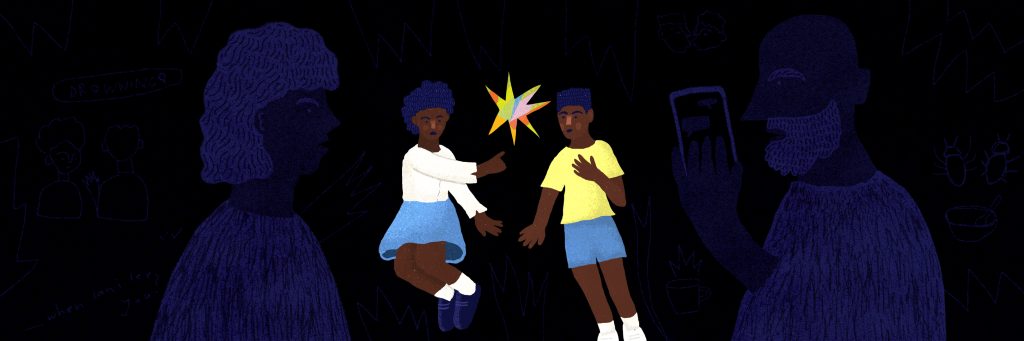
The new game Oyin and I invented is called Shock-Me-I-Shock-You. We play it whenever our parents aren't around. Often, Daddy…
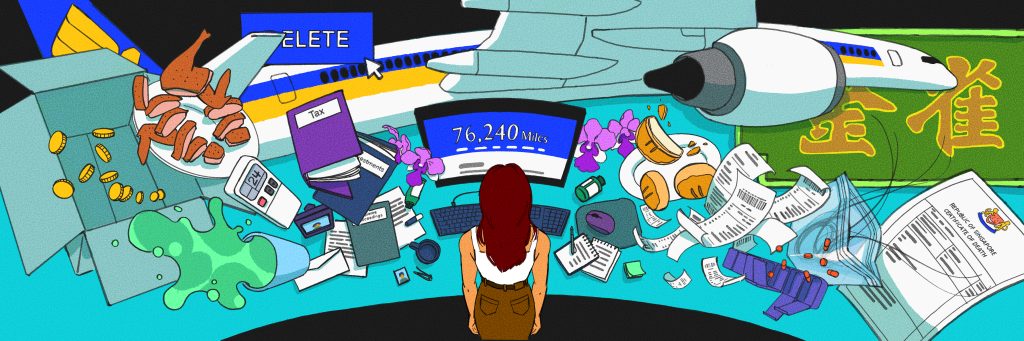
The KrisFlyer miles of a dead person cannot be redeemed. The woman on the hotline said it as if she…
Sign up to receive new pieces of writing as soon as they are published as well as information on competitions, creative grants and more.