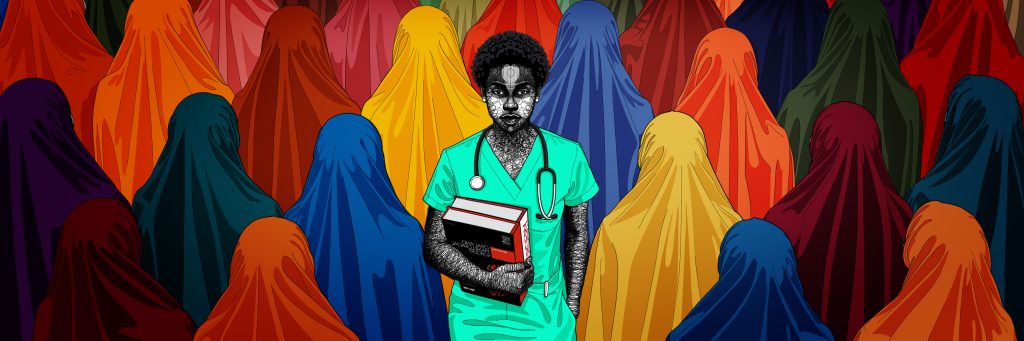
Arewa Girls
We were girls once. The girls you once saw hawking on the streets of Arewa—selling awara, wainan rogo, dan wake…
The online magazine of new writing from around the globe
25 September 2026
The sun feel uneasy, shining too hard—like it know something coming. I glance up. Corbeaux wheel above the market, wings cutting slow black rings in the light, like they marking attendance before the day start.
‘Move, pot hound!’ one of the women hiss, broom ready.
But her neighbour chuckle, tossing me a bone slick with grease. ‘Reds, mais non, laisse li…he part of the place.’
I take it, settle by the stall’s edge and chew slow, listening. The brethren talking loud about Zion and Babylon, same way the doubles man talk about pepper sauce, both with fire and faith. Somebody whistle a line of old Marley, Redemption Song, soft and steady.
When I finish, I lick my paw clean, nose the air. Even with belly half-full, a stray still searching; hunger deeper than stomach. In the Drag Mall—some does call it Little Africa—life beat steady like drum. Smoke and sweat rise together, making the heat shimmer. Each stall a sermon, each voice selling some kind of offering: bone or blessing. All under the same hard sun.
The noise follow me as I wander toward the wharf, past the smell of frying oil giving way to salt breeze. Morning slip over Port of Spain with scent before light, salt sweat from cane fields long gone, incense from the temples of those who come after, diesel from the oil boats. This place still carry that echo, curry mixing with cocoa, roti smoke curling beside salt-fish fry.
The heat humming. The sea talking to itself. Memory drift in like a slow tide returning to claim what it left behind. I remember a story I hear once from a sailor who pass through here. He talk about India and a grand hotel shining like a palace, with a sign outside: Dogs and Indians Not Allowed. He say one rich man, shamed and furious, build a better one to prove who had the right to stand in the light. He call it the Taj Mahal Palace Hotel.
I didn’t understand back then. Now, I think I do. Strange thing, the rules of belonging. They just change the words on the sign. Sometimes it say Dogs and Indians, sometimes Poor and Stray, sometimes nothing at all, just the look in a person’s eyes.
A man selling doubles look down when he see me pass. ‘Dog, eh, go ‘way nah,’ he say, waving his rag like it could chase more than flies. His tawa shining in the sunlight. For one flicker, I see myself in it, brown fur, brown skin, same sun burning both. But he don’t see that. He watching past me, like the story still hanging in the heat. Dogs and Indians, still trying to decide who get shade and who must walk till the soles burn.
By the time I reach my breadfruit tree at the market’s edge, the hum behind me feel like memory. I stretch out, half-dreamy, half-hungry. The city breathing heavy, swelling like tide, horns bawling, sunlight bouncing sharp off zinc and glass. Even the corbeaux circling wider, like they waiting their turn.
I blink slow in the heat, belly heavy, eyes half-closing, thinking to find a quieter corner, when I see them. A tall, pale woman, with hair the colour of dry corn and eyes too blue for this kind of light, and her male companion, skin with a little island sun left in it, though his voice bend British now. You can always tell: the sandals, the sun hat, the clean, careful look of somebody who ain’t used to sweat. She holding a camera like is compass and shield at once.
‘Oh!’ she say, almost singing the word. ‘Look at this one. He’s beautiful, in a rugged sort of way.’
Her friend, with his guidebook face, nods. ‘Poor strays, they’re everywhere. It’s so sad. My parents told me about them.
I watch them the way I watch the rising tide: curious, but ready to move if it come too close. She kneel a little, camera lifting slow. ‘He’s just lying there. Isn’t it tragic? Someone should do something about this.’
I cock my head. ‘Do what, miss lady? Stamp my paw and give me a visa?’
But she don’t hear sarcasm. She only see a story she could tell later: the suffering dogs of the Caribbean. I can almost hear the headline already.
Her friend sighs. ‘They should really have shelters here.’
I bark soft, not loud, just enough to make them jump. ‘We have shelter,’ I mutter. ‘The whole island, if you know where to look.’
The vendor nearby, an old man with a beard like cassava flour, look up from cleaning fish and call out, ‘Eh, lady! That one is local celebrity. He know every pothole in Trinidad.’
The tourist lady laugh polite, still clicking pictures. ‘He must be so hungry,’ she say.
‘Hungry?’ I think. ‘Lady, you looking at life, not sorrow.’
Then she say a line that stick in my head like a thorn in my paw: ‘In our country, we’d never allow this. Dogs just roaming free.’
The vendor glance up at her and chuckle. ‘Madam, sometimes roaming is the only freedom left.’
She freeze. Not angry, just confused. The kind of confusion that happen when a word shift shape in front of you. She lower her camera, turn to her companion, murmuring, ‘We could find a local puppy to adopt?’
Maybe she mean well.
Her shadow pass over me, long and pale, as they walk off. I think about how people like her does see the world. For her, a leash is safety. For me, it’s sentence. They like things neat. This island never was. Never will be.
The old vendor finish washing his knife and glance at me. ‘You hear them people? Always sorry for what they don’t understand.’
I stretch, yawn, watch a corbeau circle low. ‘Everybody sorry for something,’ I say. ‘Some just have camera to prove it.’
He burst out laughing, nearly drop he fish, like he hear the joke hiding inside my words.
*
The sun higher now. Sweat rising, frying oil hissing, vendors bawling about gas price, about government, about Carnival band too expensive this year. I listen from under my tree, tail flicking to the beat of calypso on the radio. One fella say he not playing mas this year. Same fella already half-naked, painting he shoe silver. People does lie easy when glitter involved. Then another voice come on, raw and knowing: ‘Next creation, I want to be a dog,’ half-singing, half-confessing. That’s Viper, old calypsonian philosopher.
I grin. ‘You see? Even man want to try my life when he fed up of his own.’
A boy see me and pelt a stone. It crack against my paw, small pain, quick but sharp enough to make me jerk and bare teeth. The sting travel up my leg, hot then gone, leaving only my pride to hurt. The stone bounce into a puddle, rippling out little circles like it mocking me. He grin, proud. That same hand holding a red cricket ball. He go throw that too?
Another boy, younger, braver, step closer, break his bake and drop half near my paw. He gone before I could draw breath. I take my time. I eat slow. The paw still throbbing, but hunger louder than pain.
People say we dogs forget quick. Eh eh, not me. Memory and breath, same thing; lose one, and you done. I remember every hand that feed me and every one that didn’t. Life hard, eh, but it sweet same time. The very hand that throw stone today does wave for help tomorrow. But I don’t judge. Hunger make fools of us all.
*
Wind shift. The air get thick, restless. The sky carry the taste of wet zinc and waiting. Vendors pause mid-sale, eyes up. A hush move through the market, quiet but heavy. Somebody mutter, ‘Storm coming.’ Even the corbeaux feel it. They lift off slow from the roof, black crosses hovering over the city. They don’t hurry. They circling again, reading the wind. Watching, like they know who not making it home tonight.
Somebody else laugh it off. ‘Nah, is just weather.’ But storms does come same way quarrel does. Start small; end big.
A truck backfire, cracking loud enough to fool the sky. Pigeons explode into the open, wings flashing against dark clouds. I stay where I am. Moving too early never save nobody. The breadfruit leaves shift above me. I settle back down, licking the last crumbs from my paw. The radio still playing faint behind me, the singer promising better days. Could be he right. I let my eyes fall shut, half-listening to the city breathing, half-dreaming of nothing. Didn’t know that when I opened them again, the day would start to tilt.
The air change first, softer somehow, scent of rain fighting with the smell of fish. Curiosity push me to my feet. I stretch, shake off the dust and wander toward the edge of the market where the road widen and the crowd thin. From there, you could see the shoppers spilling onto the street, sun bouncing off car roofs and glass.
That’s when I see her.
White fur shining like moonlight in midday, too bright against the black asphalt, red ribbon neat as prayer. She walking just past the market corner, where Charlotte Street begin, her owner pulling her steady through the heat. A small woman in sunglasses and gym top, the kind that say she have car and air-condition waiting somewhere close. She glance around, quick but searching, like she looking for a place or a face she not sure still there. The woman hold the leash tight, steering the dog through the crowd as if cutting through a foreign country.
You don’t see her kind walking down here unless the driver park too far. She pass the Rasta man roasting peanuts like she passing incense: quick, careful, pretending not to want any. The dog walk soft, each paw a question.
‘Easy now, girl,’ the woman whisper, voice low like she soothing herself as much as the dog. ‘Almost there.’
I follow from the gutter side, past the market and down toward Henry Street, where the afternoon still loud. I watching from under a van, minding my business, till the little dog look straight at me, like she never blink at hardship.
‘Good day,’ she say. Her accent proper-proper, like she went convent. ‘You shouldn’t be under there. It’s filthy.’
I narrow my eyes. ‘Lady, if you think dirt does wash off easy, you ain’t live long enough.’
She hesitate, then step closer, nose wrinkling at the reek of oil and fried channa. Her words come careful, clipped. ‘You could at least try to keep clean.’
I let out a low grunt, not bark. ‘Clean doh keep my belly full.’
Her tail flick, offended but unsure. ‘You sound common.’ Her words bite, not because she wrong but because part of me want her to see more than dirt and ribs.
‘Common is what keep the island breathing,’ I tell her. ‘You ever try to breathe through ribbon?’
She glare, but with a flicker soft behind it. Curiosity or pity. Same thing sometimes.
Her owner give a quick jerk of the leash, sharp as reminder. ‘Come along, Duchess.’
Ah. So that’s her name. Figures.
When they pass, the wind carry perfume and powder, the kind that never last past the first drop of rain. I wait till they gone, then follow them, keeping distance.
The dog step light, tail high, paws lifting dainty from the puddles like she afraid the earth might stain her. Her mistress walk a few paces ahead, grip firm but eyes far off, seeing nothing of the street—not the boys playing cricket, not the woman begging by the shop corner, not even the man cursing at his own shadow.
She moving through another Port of Spain entirely, the kind up by Federation Park, where even breeze feel like it have passport. Up there, streets wide and quiet, hibiscus trimmed neat. Could be she live behind one of them hedges, windows wide but rooms empty.
Maybe she talk soft to the dog so echo don’t answer back.
Still, I can’t stop watching.
Near the rum shop, the calypso change: a soca-chutney tune this time, rhythm skipping between tassa and brass, sound rough, like it drink smoke for breakfast.
Duchess pause, nose twitching. Her tail stiffen, one paw half-lift like she don’t want to dirty it.
‘That’s…noisy,’ she say, the words gentle, but questioning underneath.
‘That’s life,’ I tell her. ‘You just hearing it for the first time.’
She tilt her head, ribbon catching light. ‘Does it always sound so…unruly?’
‘Unruly?’ I snort. ‘Sweetheart, that’s the sound of people trying to forget they broke till tomorrow, even with oil and gas pumping under their feet.’
Her ears twitch. ‘That’s rather bleak.’
‘Bleak is fence and fear dressed up like freedom.’
She fall quiet. The song fade. Her owner buy coconut water in a bottle from the vendor’s cooler: same taste, no shell, no mess. She sip slow through her straw, like she drinking the idea of island instead of the real thing. Duchess watching me still. I stretch under my van, half in sun, half in shadow.
‘Tell me one thing,’ I ask. ‘You ever roll in mud just for joy?’
Her nose lift. ‘Certainly not.’
‘Then you never live.’
Before she could answer, her owner tug again. ‘Come, Duchess!’ She turn, almost unwilling. For a moment I swear she smile, not with mouth, with eyes. The kind of smile you make when you see a side of the world that don’t fit your story yet.
When they gone, I wander down to the drain by Independence Square. The old ones still call it Marine Square, from back when the sea came up this far, and ships bring flag and order. Now they call part of it Brian Lara Promenade, where boys bowl bottle caps and dream of sixes while men talk politics and rum. Names keep changing, but the ground remember everything.
The city reflecting itself upside-down, sky where road should be. Everything look calm till wind ripple the surface, and the whole illusion fall apart. I think about Duchess and her ribbon, how easy it is to forget what hiding under shine.
The fisherman I know, the one who drink more than he sell, toss me a fish tail. ‘Eat up, soldier,’ he say. ‘You look like you thinking too much.’
He not wrong.
We all wear leash. Silk, rope or something else. Perhaps I envy her: her leash, her certainty, her world. But I remember. Once, I had a collar too. Red like her ribbon. Tight like promise. Don’t recall who take it off first, me or them. Maybe she and me ain’t so different, just pulling from opposite ends of the same chain.
I chew the fish tail slow, watching clouds start to gather again over the sea. The air thick with rain scent, with what refuse to fade. Somewhere far, the sky mutter to itself. Under the breadfruit tree, the light already shifting, the day bending toward a restless edge. Didn’t know it yet, but the storm—the one in the sky and the one between me and Duchess—only just beginning.
Later that afternoon, when the heat start to dance in the street-haze, I rest by the seawall near the market. The air heavy with fry fish and salt breeze, mixing up together, rich and heady. A radio far off playing some old-time kaiso, the singer voice uneven like coconut husk but full of joy, full of life.
Wet smell drifting again, far yet but coming. The sky getting that strange shine before the clouds open their mouths. I move closer to the breadfruit tree where the air dense and familiar.
The first drop fall hard enough to sting.
The second taste of iron.
By the third, the sky split open, tired of holding back.
Rain don’t fall in Port of Spain. It attack.
Big, thick drops beating tin roofs.
Drums on car bonnet.
Old talk rumbling behind the hills, coming back to start trouble.
Lightning flash, then gone.
Water rising fast, swallowing everything, tout bagai.
Drains coughing. Gutters spilling.
Street turn river. River turn sea.
I run, half-blind, through the rush of water and noise. My paws slip, heart thumping in time with the storm. People shouting: ‘Close the stall!’ ‘Move the van!’ ‘Jah, look the lightning!’
The market reeking now; everywhere is wet wood, diesel, fear.
I duck under an overturned boat near the wharf. The space narrow, but it dry, and for a while that enough. From here I could see the whole scene: men holding tarpaulins over their heads, women chasing baskets floating away, children shrieking like they forget the danger.
Boy, storms does strip people bare. Some run. Some rescue. Some just stare, waiting for the sky to make up its mind.
The rain pound harder.
It beat like anger.
It speak like the past refusing peace.
I listen, water hammering the city like it want to wash away all the lies we tell ourselves, that we different, that some made for shelter while others stay outside. The wind tear through the city, pulling scent together: fish oil, perfume, sweat, fear.
And for one soaked moment, the island breathe as one.
The water rising fast now, licking tyres, climbing steps, swallowing fish crates by the dock. The boat above me shifts, creaking like old bone. I try to crawl out, but the tide shoves harder, sucking at my paws. Water flood my ears, eyes, mouth. For a breath, I don’t know up from down. I kick free, claws scraping concrete, and burst near the wharf’s edge, where flood meets street, into the sky’s open throat.
Then I hear the scream.
High, sharp, cutting through thunder like glass breaking.
The same boy from the morning, the one with the red cricket ball, chasing it as it spin away.
His mother shouting behind, words swallowed by the roar.
A car sliding down the road, horn blaring useless.
I don’t think. I just move. No command. No call. Just the pull of my own instinct, clean and fierce, like leash gone slack forever.
Water in my eyes, wind in my teeth. The world turn noise and flash, water, metal, pain.
The car swerve; the ball vanish; the boy fall, safe.
Me…not so lucky. The bumper kiss my side hard enough to make the breath leave.
I tumble into the gutter, water rushing over my head. When I open my eyes, the boy gone. Car gone. People running again, busy saving themselves. Nobody see me bleeding.
I drag myself to the pavement, shaking. Every bone talking at once.
The rain cold now.
Whiff of mud and exhaust, sharp, alive.
I find shelter under a broken awning. The place thick with old wood and kerosene. I thinking this is where it end. Then I hear it, a soft whimper. Not mine.
Behind a pile of boxes, something white shivers.
Duchess.
Ribbon gone, fur the colour of stormwater instead of snow. She look lost, eyes wide with the kind of fear money can’t train away.
‘Well, look who freedom find,’ I say, voice hoarse but kind.
She stare at me, trembling. ‘I can’t find my mistress.’
‘Maybe she can’t find herself either.’
She don’t answer. Rain dripping from her nose, ears flat. I move closer. ‘Come. Roof not much, but better than sky’s quarrel.’
She hesitates, then steps beside me. The space tight, our bodies pressed against the wall. I feel her heartbeat, quick, scared.
For a long time we just breathe.
*
Outside, the deluge roars.
Inside, silence full of small truths.
Finally, she whispers, ‘You saved that child, didn’t you?’
I shrug.
Her eyes soften. ‘It’s not fair.’
‘Fairness is a fancy word for people with dry clothes,’ I tell her.
She lets out a small whimper, breaking, gentle.
After a while she says, ‘Freedom isn’t what I thought it was.’
‘No,’ I say. ‘Freedom have fleas, yes, but it sweet.’
Lightning flash, showing her face, tired, wet, real.
Not Duchess now. Just another stray trying to outlast the storm.
We stay there till the rain ease to drizzle, till the smell of earth replace the metal stink of floodwater. When the first bit of sunlight cut through the clouds, I get up careful-careful, everything aching but still working.
She look at me, uncertain.
‘You going?’ she ask.
‘Somebody have to check if the world still there.’
She smile, faint but true. ‘You really are…something.’
‘Just stray,’ I say. ‘Same as you, only I learning it late.’
A woman’s cry echo in the distance, sharp, worried. ‘Duchess! Duchess!’
Her ears twitch. She look toward the voice, then back at me.
At first I think the woman only love the dog like people love they own reflection. Clean, easy to manage. But the way she search the pavement, calling low, I know is more. Is fear. Is care.
‘Go,’ I tell her. ‘That’s your pack.’
For a moment she don’t move. Then she run, paws splashing, tail low.
At the corner she stop, look back once, eyes meeting mine, before disappearing into the light.
I watch her go till the street empty again, the air thick with that quiet only after a storm.
The city washed raw and reborn, sun warming the wet street, asphalt steaming soft underfoot, a prayer the sky still remember how to say.
Morning come soft, streets shining like new skin.
Duchess gone. The boy safe. Me, I still breathing.
That’s the whole republic right there—all who survive the storm and still choose to stay.
The city calmer now, just the hum after rain. Mud drying on my fur, crusting the road.
Colours soften, lose their edges, like river water finding its way to the sea.
Maybe that’s what this island is after all, a Pot Hound Republic.
A new kind of pedigree, bred from struggle, salt and song.
I limping, muscles stiff, but moving mean I still alive.
A maxi taxi honk and swerve round a pothole big enough to baptise somebody.
People already back to their business, sweeping, shouting, cursing the flood.
Smoke billowing from street corners again; corn soup bubbling; the doubles man back with his trays, calling, ‘Hot still, eh!’
Is the city pretending nothing bad ever happen.
A vendor cuss; two boys play cricket in the street.
Fishermen by the wharf mending nets and talking the same talk, about the catch they nearly lose, about politics, about God, Oshun, Allah, Shiva or whoever watching sea and sky today.
Same as yesterday, just softer now, like the weather teach everybody manners for a little while.
I find my breadfruit tree still standing. The ground soft but roots strong.
The leaves dripping in time with my thoughts.
I lie down gentle, careful with the side that still ache from the car.
The sun just start to push through cloud, weak but honest.
A boy pass by, little one, the same who give me bake before.
He stop, smile shy. From a paper bag he pull another piece, warm still, and toss it near my paw.
‘Morning, Carib,’ he say, like he been calling me that all his days.
I wag my tail once, quiet thanks. He grin and dash off.
*
Carib.
Funny how a name could make the world feel a little less empty.
*
I chew slow, thinking about Duchess.
Wonder if she back behind her gate, clean again, pretending mud never touch her.
Maybe she dreaming about rain still. Maybe she learn a truth she can’t unlearn.
Freedom come in different shapes, oui—some gilded, some bruised.
Mine just happen to bleed a little.
Somewhere the tourist lady taking picture of the new sunrise, thinking it mean hope. She might be right. But to me, it just mean another day to live. Hope small as a crumb, yes, but it taste like bake when you didn’t expect it.
Yesterday I was stray. Today, I not so sure. Maybe all ah we stray. Man, dog, Duchess, tourist, fisherman, Rasta, pundit. Just looking to see where we fit.
The wind shift, carrying the sea’s breath all the way up to the market. Above, corbeaux circle, sedate, their wings tracing the same wide rings they drew yesterday. They marking who turn up today.
Then it come, a low chorus of barking, rolling from hill to wharf, one cry bright as glass among them. I recognise that sound. Duchess.
The island calling back, all kinds of dog, stray and kept, answering the same song. I watching from the edge, where the tide meet the drain.
And this time, I don’t just listen. I lift my head and join them.
We were girls once. The girls you once saw hawking on the streets of Arewa—selling awara, wainan rogo, dan wake…
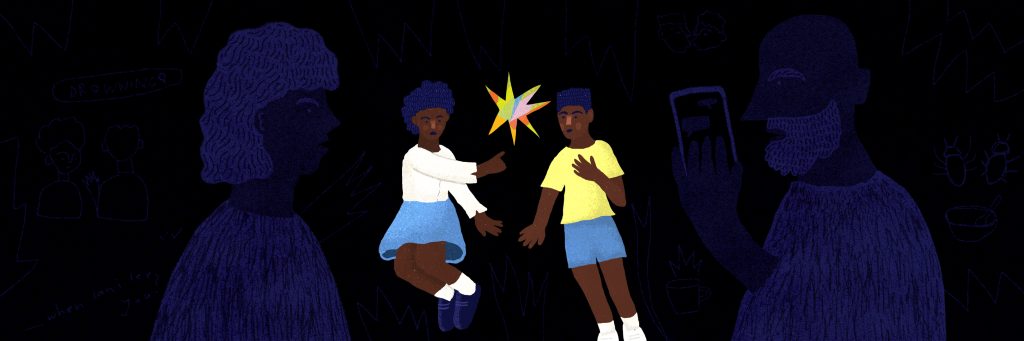
The new game Oyin and I invented is called Shock-Me-I-Shock-You. We play it whenever our parents aren't around. Often, Daddy…
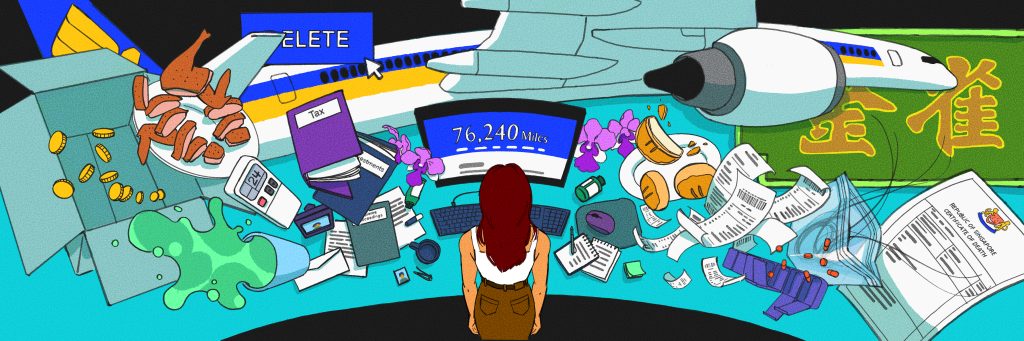
The KrisFlyer miles of a dead person cannot be redeemed. The woman on the hotline said it as if she…
Sign up to receive new pieces of writing as soon as they are published as well as information on competitions, creative grants and more.