
Arewa Girls
We were girls once. The girls you once saw hawking on the streets of Arewa—selling awara, wainan rogo, dan wake…
The online magazine of new writing from around the globe
4 September 2026
The hydraulic press was talking to Isaac again.
Pom pom peedeem pom.
He wiped sweat from his forehead with the back of his glove, the fabric already soaked through from eight hours in the Lima heat. The warehouse didn’t have proper ventilation, just two rusted fans that pushed hot air from one side of the building to the other. Around him, the machinery screamed its usual chorus: conveyor belts shrieking, compressors hissing, the steady thunk-thunk-thunk of the cardboard baler.
But underneath all that noise, Isaac heard it clear as day.
Pom pom peedeem pom.
A bass line. Deep and insistent, like somebody playing a four-string in the next room. He’d been hearing it for three days now, soft at first, so soft he thought maybe it was just the memory of music, his brain trying to fill the silence inside him. But tonight it was louder. Tonight it had teeth.
‘Ey, Trinidad!’ Carlos called from across the floor. ‘You sleeping standing up? Vamonos, chico!’ Hurry up, man.
Isaac blinked. The press had stopped mid-cycle, the metal plate hovering above a stack of flattened boxes. The emergency stop button was depressed under his palm. He didn’t remember pressing it.
‘Sorry, boss,’ he called back, pulling his hand away. The metal was hot enough to burn through the glove.
Carlos waved him off, already turning back to his clipboard. The man had better things to worry about than one distracted worker on the night shift. Most people working La Victoria warehouses were distracted, running from something or toward something, rarely present in the act of crushing cardboard for nine soles an hour.
Isaac reset the press and watched it cycle. Thunk. Down. Hisssss. Up. Thunk. Down.
As the press hit the bottom metal, he heard it:
Pom pom peedeem pom.
His jaw clenched. No. He’d left this behind. He’d left everything behind: the music, the band, the promises he’d made and broken, the borrowed bass he’d never returned, Shari’s family who’d lost their deposit because of him. He’d got on a plane with one suitcase and enough shame to fill cargo, and he’d come here to Lima because nobody here knew him; nobody here cared about Carnival or calypso or who Isaac Marcel used to be.
The rhythm pulsed again, and this time he felt it in his molars.
You can’t run from rhythm, boy. His father’s voice, salt-thick and certain. The music does find you. Always.
‘Bullshit,’ Isaac muttered in English. A woman sorting boxes nearby glanced at him but said nothing.
The shift crawled. Every time the machinery cycled, the rhythm answered. The conveyor belt: pom pom peedeem pom. The overhead lights, flickering: pom pom peedeem pom. His own heartbeat, traitorous in his chest: pom pom peedeem pom.
By 3am, Isaac’s hands were shaking.
By 4am, he’d made a decision.
He waited until Carlos went to the bathroom then walked to the main power junction. It was supposed to be locked, but somebody had broken the padlock months ago and never replaced it. Isaac opened the grey metal door and stared at the nest of breakers and wires inside.
He knew machines. His uncle had been an electrician in Diego Martin. Isaac knew which wire to pull to make it look like an accident.
The lights died first. Then the conveyor belts groaned to a stop. Somebody shouted in Spanish. In the sudden darkness, Isaac heard nothing but his own breathing and—
Pom pom peedeem pom.
Louder now. Definitely louder.
The emergency lights kicked on, bathing everything in red. Carlos was running toward him, flashlight beam swinging wild. ‘What you do? What happen?’
‘I don’t know, boss!’ Isaac backed away from the junction box, hands up. ‘It just—something blow, I think!’
Carlos was already on his phone, shouting for the maintenance supervisor. Other workers gathered, grateful for the break, lighting cigarettes and complaining about the heat.
Isaac walked to the loading dock and sat on the concrete lip, legs dangling into the night. Lima spread out below him, a carpet of yellow lights and smog. Somewhere a dog barked. Somewhere a car alarm wailed.
And underneath it all: pom pom peedeem pom.
He pulled off his gloves. His hands were steady now, but wrong. The fingers kept twitching in familiar patterns, first position, third position, the muscle memory of playing bass. He made fists, trying to stop it.
The shift ended with Carlos sending everyone home, promising half-pay for the lost hours. Isaac walked to his boarding house in Barrios Altos, the pre-dawn streets empty except for a few vendors setting up for morning. An old woman was frying picarones, and the sweet smell of squash dough made his stomach turn.
In his room, he stripped down and lay on the thin mattress, staring at the water-stained ceiling. The rhythm was everywhere now. In the drip of the broken faucet. In the creak of the bed frame. In the pulse of blood through his temples.
Isaac pressed both hands flat against his chest, fingers splayed wide like he could hold his own heart still.
The rhythm beat back at him from inside.
Pom pom peedeem pom.
He clawed at his shirt, buttons popping. His nails found skin and dragged, leaving red lines across his sternum. The rhythm didn’t stop. It never stopped. It was in him now, and Isaac Marcel finally understood: he hadn’t left Trinidad.
Trinidad had followed him across the sea.
**
Isaac hadn’t slept in three days.
The earplugs didn’t work. The sleeping pills from the 24-hour farmacia just made everything worse, turning the rhythm into something thick and syrupy that dripped through his skull like molasses. He’d lain in bed watching the ceiling fan spin, each rotation marking out the beat: pom pom peedeem pom, pom pom peedeem pom.
Now he was back at the warehouse, and his hands wouldn’t stop shaking.
‘You sick or what?’ Carlos stood too close, breath sour with coffee. ‘You look like mierda, Trinidad.’
‘I good, boss.’ The words came out slurred. When had his tongue got so thick?
Carlos studied him, then shrugged. ‘Bueno. Press three need boxes. Vamos.’
Isaac walked to press three. Or tried to. The floor tilted like a ship’s deck, and he had to grab the conveyor belt frame to steady himself. Around him, the warehouse machinery sang its industrial hymn, but underneath (always underneath) that other rhythm pulsed.
He reached for the box stack and saw Shari’s face in the cardboard.
Her actual face, brown skin and disappointed eyes, staring at him from the corrugated surface. Her mouth moved: You make a promise, Isaac. You make a promise to all of we.
‘I know.’ His voice cracked.
The cardboard shifted. Now it was Marcus from the band, then Jamal, then his father, all of them looking at him with the same expression. The borrowed bass hung between them, strings gleaming like accusation.
Isaac grabbed a box and shoved it into the press. Another. Another. Faster. If he worked fast enough, maybe the faces would stop; maybe the rhythm would…
The press cycled down.
His hand was still inside.
‘MIERDA!’ Somebody screamed, Carlos maybe, or him; Isaac couldn’t tell, and then hands were pulling him back, the metal plate stopping inches from his fingers. The emergency stop blared. People crowded around.
‘¿Estás loco?’ Carlos shook him. ‘You almost lose your fucking hand!’
Isaac stared at his fingers. Still there. Still twitching in bass patterns.
‘Go home.’ Carlos’ voice was hard now. ‘Don’t come back until you sleep, you hear? I don’t need nobody dying on my shift.’
**
Dawn was breaking over Lima as Isaac walked.
He didn’t know where he was going, just that he couldn’t stay in his room with its thin walls and thinner mattress and the ceiling that pressed down like a coffin lid. So, he walked. Through Barrios Altos with its narrow streets and graffitied walls.
The city smelled like exhaust and frying oil and the ocean, somewhere distant. Nothing like Port of Spain. Nothing like home.
But the rhythm: the rhythm was the same.
Pom pom peedeem pom. In his footsteps. Pom pom peedeem pom. In the bus brakes. Pom pom peedeem pom. In the clatter of shutters opening, in the hiss of steam from a coffee cart, in the click of his own jaw clenching.
He found himself outside a church. Small thing, wedged between two buildings like an afterthought. The door was open. He could see candles inside, smell incense.
Isaac’s feet stopped at the threshold.
He’d made a promise once, in a church. The whole band had been there, hands stacked on top of each other over the borrowed bass.
‘We staying together,’ he’d said, and meant it. ‘All of we. We going international; we going big. This is we year.’
Marcus had grinned. Jamal had whooped. The bass had hummed under all their hands, waiting to be played.
Three weeks later, Isaac was on a plane.
Now, he stood at the threshold of this church. His body wouldn’t move. A weight pressed against his chest. The rhythm pulsed harder.
You can’t pray away what you done, boy. His father’s voice again, or maybe his own. You can’t run from this.
Isaac backed away. A woman going in to light a candle gave him a curious look, but he was already turning, already walking, feet carrying him away from grace he didn’t deserve.
The sun climbed higher. The city woke up properly, cars honking, people shouting, the whole sprawling mess of Lima coming alive. Isaac walked until he didn’t recognise the streets anymore. Miraflores, maybe. Nicer buildings here, painted white and yellow. A market nearby, vendors calling prices.
And then he heard it.
Not the rhythm in his head. Real sound. Coming from a side street.
Isaac stopped. Listened.
Tap tap-tap. Tap tap-tap.
Somebody was playing percussion. Not the pom-pom-peedeem-pom, but something close. It had the sense and the taste of reality. Not like the echoing in his skull.
He followed the sound like a drunk following a bottle. Down the side street, past a panadería, around a corner. And there, sitting on a plastic crate in the shade of a bodega awning, hands working over a conga drum…
A man. Dark-skinned, maybe Venezuelan from the look of him. Two fingers on his left hand were mangled, bent at wrong angles. But his hands moved fast, coaxing rhythm from the drum skin.
The man looked up. Saw Isaac staring.
Their eyes met.
And for the first time in three days, the rhythm in Isaac’s head went quiet.
The silence in Isaac’s head lasted exactly five seconds.
Then the Venezuelan looked back down at his drum, and the pom-pom-peedeem-pom came rushing back, louder than before, like it was angry he’d tried to escape.
‘Jesus.’ Isaac stumbled forward. ‘Wait…you…’
The man’s hands stilled on the drum. Up close, Isaac could see the damage properly: the left hand’s ring and pinkie fingers bent sideways, the knuckles thick with scar tissue. Old injury. Badly healed.
‘¿Qué quieres?’ The man’s voice was rough, suspicious.
‘You playing that rhythm,’ Isaac said. The words tumbled out too fast. ‘Just now. You was playing it.’
‘Chamo, I wasn’t playing nothing.’ The Venezuelan’s eyes narrowed. ‘I was fixing this tambor. The skin loose.’
‘No, before…I hear it from down the street…’ Isaac reached out like he might grab the drum, prove something, though he didn’t know what. The man’s good hand moved to cover it protectively.
‘You need to step back, pana.’
Isaac did, but his hands were already moving, fingers tapping out the rhythm on his own thigh. ‘This. You was playing this.’ He found a wooden crate nearby, knelt beside it and knocked out the pattern with his knuckles. Pom pom peedeem pom. Pom pom peedeem pom.
The Venezuelan watched, expression unreadable. Then something shifted in his face. Recognition, maybe, or concern. ‘That’s batuque. Brazilian pattern. You Brazilian?’
‘No, I…’ Isaac stopped. ‘What you mean, Brazilian?’
‘That rhythm. Is from Bahia, maybe Rio. Street samba.’ The man demonstrated on the conga skin with one hand, a quick ba-dum ba-dum-dum. ‘See? Similar but different. Where you hear this?’
The question sounded less hostile now. Almost curious.
‘Isaac,’ Isaac said, extending his hand without thinking. ‘Isaac Marcel. From Trinidad.’
The Venezuelan looked at the offered hand for a long moment, then took it briefly with his good one. ‘Luis.’ No last name. Just Luis.
‘Everywhere,’ Isaac said, answering the earlier question. ‘I hearing it everywhere.’
‘Everywhere,’ Luis repeated flatly.
‘In my head, in the machines at work, in the…’ Isaac pressed his palms to his temples. ‘You don’t understand. I can’t make it stop. Three days now, I can’t sleep; I almost lose my hand at the warehouse because I seeing things…’
‘Estás loco.’ Luis picked up a beer bottle from beside the crate, took a swig. ‘You need a doctor, not a tambor player.’
‘I not crazy.’
‘Sure, pana. You just hearing music nobody else hearing; you walking around Miraflores looking like the dead, and you—’ Luis stopped mid-sentence. The bottle in his hand had started tapping against his knee. Clink. Clink-clink. Clink.
The rhythm. Isaac’s rhythm.
Luis looked down at his own hand like it had betrayed him. Then, deliberately, he set the bottle down and held both hands in the air. ‘I wasn’t…’
‘You was playing it.’
‘I wasn’t playing shit.’ Luis stood up, and Isaac saw how thin he was, how his shoulders carried the kind of tension that came from always watching your back. ‘Look, pana, I don’t know what you want from me, but I can’t help you.’
‘I just need to know if you hearing it too…’
‘I don’t hear nothing.’ Luis’s voice went hard. He lifted his damaged hand, showed Isaac the bent fingers up close. ‘You see this? SEBIN did this. Venezuelan intelligence. Because I played the wrong song at the wrong protest. You understand? I play music, and bad things happen. So I don’t play music no more. I fix drums; I sell them; I keep my head down.’
‘I not asking you to…’
‘You asking me to pay attention. To listen. And pana, listening is what gets you deported. Listening is what gets you killed.’ Luis gathered up his tools, a small knife, some twine, a tin of something that might be wax. ‘I’m illegal here. You understand what that mean? I make noise, I draw attention, I disappear. And nobody gonna look for a disappeared Venezuelan.’
Isaac stood there, hands still twitching. The rhythm pounded in his skull.
Luis softened slightly, seeing something in Isaac’s face. Maybe recognition. Maybe pity. ‘You want crazy? Look around. We all crazy. We left home. That’s the craziest thing anybody do.’ He picked up the conga, tucked it under his good arm. ‘You want music, hermano, go borrow a guitar. Don’t come asking me to risk my life for some ghost only you hearing.’
He walked away, limping slightly. Isaac watched him disappear around the corner toward the market.
But before Luis turned out of sight, Isaac saw it: the man’s free hand, hanging at his side, fingers tapping out a rhythm against his thigh.
Pom pom peedeem pom.
Just once. Then Luis shoved his hand in his pocket and was gone.
Issac let his eyes roam, trying to settle on anything else that would make him forget the rhythm. He looked across the street. Through a bar window, hanging on the wall above bottles of pisco and Cristal, a guitar caught the afternoon light.
It hung on the wall behind the bottles, dusty strings catching the afternoon light. An old classical guitar, the kind his uncle used to play at family cookouts back in Diego Martin.
Borrow a guitar, Luis had said.
Isaac’s hand was on the door handle when he stopped. What was he going to do? Walk into the people’s bar and ask to borrow their decoration? They’d think he was crazy. Or a thief.
The rhythm pulsed. Pom pom peedeem pom. His jaw clenched so hard his teeth ached.
He needed to understand this thing. Needed to know if it was real or if he was actually losing his mind. Luis had called it batuque, Brazilian. But Isaac knew what he was hearing, and it wasn’t Brazilian. It was his.
There had to be other Caribbean people in Lima. People who’d understand. People who’d know about…what? Obeah? Curses? The way music could follow you across an ocean?
Isaac walked.
He passed the market, asking vendors if they knew any Trinidadians, any Guyanese, anybody from the islands. Most ignored him. One pointed vaguely toward Miraflores. ‘Hay una oficina. Shipping. Trabajan caribeños ahí.’ Caribbean people working at a shipping office.
A door opened. A fat man in a too-small guayabera looked out at them. ‘¡Se acabó! No más trabajo hoy. Come back mañana.’ Place closed. Come back tomorrow.
Groans. The men stood, shoulders slumped. The Colombian spat on the floor.
Isaac stayed seated. Where else he had to go?
‘Tú también,’ the man said, pointing at Isaac. ‘Vete.’ You too. Get outta here.
‘Please, I just need…’
‘Mañana. Tomorrow. Go.’
Isaac stood. The floor tilted slightly; he hadn’t eaten properly in how long now? He grabbed the wall, waiting for the world to steady, then walked towards what he thought was the exit.
Wrong door. He found himself in a break room: two tables, a humming refrigerator, a coffee maker with a cracked pot. And a man sitting alone, eating arroz con pollo from a plastic container, reading a book.
‘Sorry, I…’ Isaac started to back out.
‘The exit’s that way.’ The man pointed without looking up. His English was clear, unaccented almost. Not Peruvian.
Isaac turned to leave, but his body had other ideas. He leaned against the doorframe, breathing hard. The rhythm pulsed behind his eyes.
‘You alright?’ The man looked up now, concerned.
‘Yeah, I just—’ Isaac’s jaw clenched. His hands started tapping on the doorframe. He couldn’t stop them. Pom pom peedeem pom. Pom pom peedeem pom.
The man’s eyes widened. ‘Hold on.’ He set down his food, stood up. ‘Do that again.’
‘What?’
‘That thing with your hand. That rhythm.’
Isaac looked at his own fingers like they belonged to somebody else. ‘I can’t—is nothing.’
‘That’s a calypso bass line.’ The man’s voice was strange now, tight. ‘Old school. Four-string pattern. Where you from?’
The question hit Isaac in the chest. ‘Trinidad.’
‘Ah.’ The man sat back down heavily. ‘Me too. Well, Guyana. Close enough.’ He gestured to the other chair. ‘Sit before you fall down, nah. You look terrible.’
Isaac sat. The man pushed his food container across the table.
‘I cyah…’
‘Eat, man. I serious. You look like you go dead right here in the break room, and I ain’t explaining that to nobody. Don’t come all the way here to put hell ‘pon jackass back…’
Isaac’s hands shook as he picked up the plastic fork. The rice was cold but he didn’t care. He ate three bites before remembering to breathe.
‘How long you in Lima?’ the man asked.
‘Eight months.’
He chuckled wryly. ‘And you just now losing your mind?’ A bitter smile. ‘I been here three years. Lose mine around month two.’
Isaac swallowed. ‘The rhythm…you hearing it?’
‘What rhythm?’
‘The one I was…’ Isaac tapped the table. Pom pom peedeem pom. ‘This one.’
The man, Cyril, his name tag said, tilted his head, listening. The overhead fan clicked as it turned. For a moment, just a moment, the blades’ rotation synced with the pattern. Pom-pom-peedeem-pom, pom-pom-peedeem-pom.
Then the fan stuttered and the moment broke.
‘Every migrant does hear something,’ Cyril said quietly. ‘Some people does hear their grandmother calling them home. Some people does hear church bells. You hearing calypso bass. Could be worse things.’
‘I can’t make it stop.’
‘That’s because you still listening.’ Cyril pulled a receipt from his pocket, something from a hardware store, and a pen. He wrote in careful letters: POM POM PEEDEEM POM. Studied it. Then wrote underneath: pon pon pi-dim pon. ‘Sound better that way. More authentic.’
‘You used to write calypso?’ Isaac asked.
Cyril’s jaw tightened. ‘Used to do a lot of things.’
‘Why you stop?’
‘Why you think?’ Cyril’s voice went sharp. ‘Because I choose to live in the real world. Where we have bills and bosses, and nobody gives a shit about our little island songs. You know what I do here? I translate shipping manifests. Eight hours a day, I turn Spanish into English so some company in Texas know how many pallets of coffee they buying. That’s my life now. Besides, you feel anybody here gon’ listen calypso?’
‘But if you could write again…’
‘Write for who?’ Cyril laughed, and it was an ugly sound. ‘The other Guyanese security guard? The Venezuelan selling cigarettes at the corner? We don’t have a scene here, brother. We’re scattered. We’re hiding. We’re trying to forget.’
‘I trying to forget too,’ Isaac said. ‘That’s why I come here.’
‘Then you come to the wrong place.’ Cyril stood, crumpled the receipt and threw it in the trash bin by the door. ‘Lima don’t let you forget nothing. It just make you watch yourself and remember.’
He picked up his food container, his book. Stopped at the door.
‘What you running from?’ he asked.
Isaac’s throat closed. The borrowed bass. The broken promises. Shari’s family. The band that lost everything because he couldn’t face his own failure.
‘I make a promise,’ Isaac said finally. ‘And I break it.’
Cyril nodded slowly, like he’d expected that answer. ‘Maybe is your conscience then.’
‘I cyah go back.’
‘I didn’t say go back.’ Cyril looked at the trash bin, then at Isaac. ‘I said stop running. Them is two different thing.’
He left.
Isaac sat alone in the break room. The fluorescent lights hummed. The refrigerator rattled. The fan clicked its uneven rhythm.
He looked at the trash bin.
Then he stood, fished out the crumpled receipt and smoothed it flat on the table. The syllables looked wrong in black ink. Too definite. Too real.
Pom pom peedeem pom.
As Isaac stared at the words, he heard footsteps in the corridor. He crumpled the receipt again, shoved it in his pocket and headed for the exit.
Behind him, Cyril appeared in the doorway, watching him go. When Isaac was out of sight, Cyril walked to the trash bin and pulled out a second receipt, one he’d thrown away long before Isaac had been sitting across from him, this one with better handwriting.
He folded it carefully and tucked it in his shirt pocket, right over his heart.
‘You go need this later,’ he said to no one.
Then he went back to translating manifests, the rhythm tapping softly in the back of his mind where he’d buried it three years ago.
**
Two weeks. Isaac had been hearing the rhythm for two weeks.
He’d stopped going back to his boarding house after the landlord changed the locks. Stopped pretending he had somewhere to be. Now he slept rough near the Puente de los Suspiros, the Bridge of Sighs, curled up in doorways, waking when the rhythm got too loud to bear.
Tonight it was everywhere. In the creak of the bridge’s boards. In the lap of the ocean against the cliffs. In his own pulse, relentless.
He stumbled through Barranco’s narrow streets, past closed shops and sleeping dogs. Looking for…what? He didn’t know anymore. Just walking, because stopping meant drowning in the sound.
Then he saw it: a small cantina, lights still on. And through the window, hanging on the wall…
A guitar.
A different one. Older. The wood dark with age and handling, strings that looked like they might snap if you breathed on them wrong.
Isaac pushed open the door.
The woman behind the bar was wiping down tables, her movements efficient and tired. Barbadian, maybe, something in the set of her shoulders, the way she moved. She looked up, took in Isaac’s appearance: three days of stubble, clothes that smelled like the street, eyes wild with sleeplessness.
‘We closed,’ she said. Her English had that Bajan lilt.
‘I know.’ Isaac’s voice cracked. ‘I just…that guitar. Let me play it. Just once. Please.’
‘No.’ She went back to wiping.
‘I’ll pay you…’
‘You ain’t got no money.’ She didn’t even look at him. ‘I can see that from here.’
Isaac’s hands were shaking. The rhythm pounded. ‘Please. I just need…’
‘Need what?’ Now she did look at him, and her eyes were hard. ‘You need to get high? You need to pawn it? I know the look, and I ain’t interested.’
‘I not a addict.’ Though he felt like one. ‘I just…’ His hands hit the bar top, drumming out the pattern before he could stop them. Pom pom peedeem pom.
The woman’s face changed. Just for a second. Then the hardness came back.
‘That guitar was my son’s,’ she said quietly. ‘He dead. And you standing here in my bar, looking like death yourself, asking me to let you touch the only thing I have left of him?’ She shook her head. ‘Get out.’
‘I’m sorry, I didn’t…’
‘My son believe music could save him.’ Her voice was cold now. ‘He believe it so much he forgot to watch his back when he was playing on the wrong corner. So you standing here proving what I already know: music don’t save nobody. It just make you careless. ‘ She pointed to the door. ‘Out.’
Isaac didn’t move. Couldn’t move. The rhythm was in his teeth now, making his jaw ache. ‘What kill him?’
‘What you think?’ Marjorie’s laugh was bitter. ‘Doesn’t matter; dead is dead.’
The door opened behind Isaac.
‘I thought I might find you here.’ Cyril walked in, receipt still in his shirt pocket. He looked at Marjorie, then at Isaac. ‘He giving you trouble?’
‘Not yet,’ Marjorie said.
‘I follow you from Miraflores,’ Cyril told Isaac. ‘You been walking for hours. Thought maybe you’d do something stupid.’
‘And you come to stop me?’ Isaac’s laugh was ragged.
‘No. I come because I curious.’ Cyril looked at the guitar on the wall.
The door opened again.
Luis stood there, conga drum under his arm, looking like he’d rather be anywhere else. ‘Mierda,’ he muttered. ‘I knew you’d end up here.’
‘You followed me?’ Isaac asked.
‘I asked around about the crazy Trini who keep bothering people about rhythms.’ Luis set the drum down carefully. ‘People said you was sleeping near the bridge. Then I see this one…’ he gestured at Cyril, ‘following you like a detective. So I follow both of you.’ He shrugged. ‘Stupid, I know. But that rhythm you play? It been in my head for two-three weeks. I can’t sleep. I can’t work. My hand…’ He held up the mangled fingers. ‘It hurt again, like SEBIN just break it yesterday.’
Marjorie looked at the three of them. Then at her son’s guitar. Her jaw worked like she was chewing something bitter.
‘One song,’ she said finally. ‘You play one song. Then you leave. And if you break that guitar…’ Her voice dropped. ‘Lord alone could help you. Understand?’
Isaac nodded. His hands were already reaching for the instrument.
The guitar was lighter than he expected, the wood warm. He sat on a bar stool, the body resting on his thigh. The strings were dusty. Out of tune. He twisted the pegs by instinct, listening, adjusting.
The first note rang out clear.
And the room answered.
Not the guitar—the room. The refrigerator’s hum dropped into the bass register: pom. A bottle on the bar rattled: pom. The ceiling fan clicked: peedeem pom. Everything in the cantina suddenly synced to the rhythm that had been haunting Isaac for two weeks.
Luis grabbed his conga and started playing, his ruined hand moving despite the pain. Blood welled up under his fingernails, but he didn’t stop. Couldn’t stop.
Cyril opened his mouth and words came out…old calypso lyrics about leaving home, about the sea, about being scattered like seeds on foreign ground. His voice cracked but he kept singing.
Isaac’s fingers found the bass line, the one his father had taught him when he was 10 years old. The one he’d played the night he made his promise to the band. The borrowed bass’s voice lived in this old guitar’s strings, calling him home.
Marjorie stood frozen behind the bar. Then, so quietly Isaac almost didn’t hear it, she started humming. Her eyes closed. Tears ran down her face.
A fist pounded on the door.
‘¡Cállense! ¡La puta madre!’ A man’s voice, angry, thick with sleep. ‘I’m trying to sleep upstairs!’
The spell shattered.
Luis’s hands stilled on the drum. Cyril’s voice died mid-word. The refrigerator was just a refrigerator again. The fan just a fan.
Isaac looked at his hands on the guitar strings. They were steady for the first time in two weeks.
The man outside pounded again; then his footsteps retreated upstairs.
Nobody spoke.
Marjorie reached out slowly and took the guitar from Isaac’s hands. She hung it back on the wall, her movements careful, reverent.
‘Don’t come back,’ she said, her back to them.
‘Señora…’ Cyril started.
‘I said don’t come back.’ Her voice was thick. ‘My son dead because he couldn’t let go. I can’t—’ She pressed her forehead against the wall beneath the guitar. ‘I can’t do this again.’
One by one, they left. Luis first, drum under his arm. Then Cyril, hands in his pockets. Finally, Isaac, looking back once at the woman’s shoulders shaking in the dim light.
Outside, the three of them stood in the cold Barranco night. The ocean crashed against the cliffs. Dogs barked in the distance.
‘Next week?’ Cyril said quietly.
Luis looked at his bleeding fingernails. Then nodded. ‘Maybe.’
‘Maybe,’ Isaac echoed.
Pom pom peedeem pom.
We were girls once. The girls you once saw hawking on the streets of Arewa—selling awara, wainan rogo, dan wake…
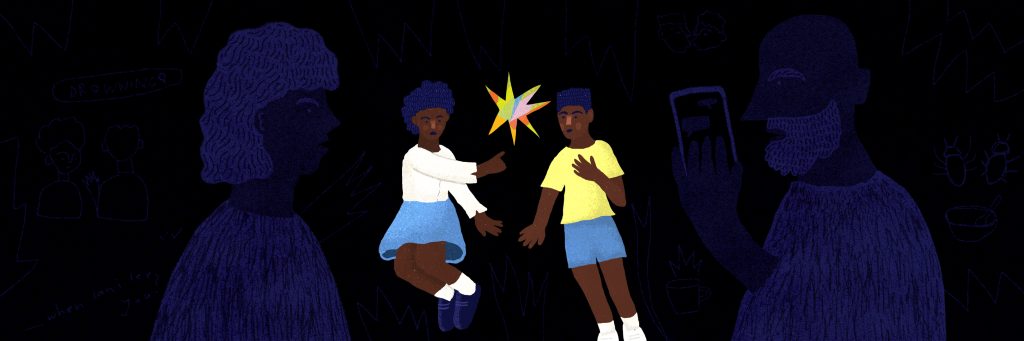
The new game Oyin and I invented is called Shock-Me-I-Shock-You. We play it whenever our parents aren't around. Often, Daddy…
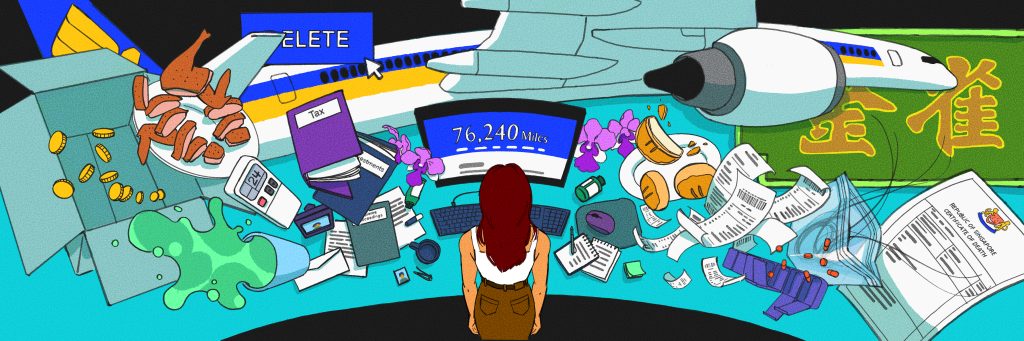
The KrisFlyer miles of a dead person cannot be redeemed. The woman on the hotline said it as if she…
Sign up to receive new pieces of writing as soon as they are published as well as information on competitions, creative grants and more.