
Arewa Girls
We were girls once. The girls you once saw hawking on the streets of Arewa—selling awara, wainan rogo, dan wake…
The online magazine of new writing from around the globe
4 September 2026
Back when I was rooming with Groovy Davey, whose actual name was Dalibor, I was renting my asshole out to strangers on the side streets of Charles Square for 300 Czech crowns. Davey got me into the business. It was 2009. Those days, I rarely thought about what it meant to sell my body for a living. I only thought of ways I might pay the rent of our rat-infested panelák and all the new stories I had to invent to tell my mother. She called me at seven-thirty in the morning because she did not want me to be late for the office. Every month, she protested she did not need the 10,000 rupees I sent her, and I always told her that supporting her was the least I could do. She inundated me with questions in broken English, and I lied to her, saying her English had improved. To speak this language was to rise higher in the esteem of her relatives.
‘You good, son?’
‘Yes.’
‘You eat well?’
‘Yes.’
‘You have girlfriend?’
‘Two, Maa. They are really nice. One lives in Popůvky and the other in Rudna.’
‘Two girlfriends!’ Maa remarked. ‘It’s dishonest, my son. Nothing good comes in life from hurting somebody.’
My mother never feared to tell me where I might encounter trouble, which life decision would become an eventual nightmare, what kind of daal was tough for the stomach to digest, which red hot curry would draw the cold away from my head to my toes and break me out in a sweat on a cold winter’s day. It didn’t matter that sitting in her cramped apartment in Howrah, my mother could never fathom the life I lived. Talking to me on speakerphone while peeling garlic (sometimes, she would peel onions or pea pods or ginger), she sounded certain that I lived a good life. I imagined her squinting, the old fan in her room whirring and her neighbours squabbling. Amidst all of this noise, she went about her daily chores, content that her son was toiling for a better life far away.
My mother spoke in Bengali when English made her tongue tired and heavy. I never told her what a chore it was to make sense of her English or resist the urge to fix her grammar or how much it mattered to me that we spoke in Bengali.
‘Speak louder, son. Neighbours are fighting about their daughter. Never let the girl out. It’s really bad. My ears are old now, not how they were when you left three years ago,’ she said.
I wanted to tell her I had forgotten how she smelled after a bath, but I couldn’t find the appropriate Bengali words. I hung up.
‘Oi kid, why don’t you bring your mommy here one of these days? I will show her a good time, if you know what I mean.’ Groovy Davey winked.
He liked to be abrasive with things he cared for. Insults were integral to our friendship.
Once, while looking out at a flock of swans across the Vltava, he told me he would like to bring a good girl home. We were sitting on a bench. The October winds created ripples all over the river, and I felt the cold iron of the bench through my pants. I had grown used to feeling exposed.
‘Where would you keep her? In the trash-can you call home?’
He punched me in the arm, and said, ‘It’s your home too, kid.’
I looked away. I saw a swan heckling a tourist for bread a few benches away. It was cut off from its flock.
He called me ‘kid’ because I was new to the business, because he saw me as a person with frail disposition and felt obligated to take care of me in a place I had no family and had recently been laid off. My visa was tied to my old job, and when that security went away, as it always does for people who are dispensable, I felt a terrible fear of the future. I was ‘illegal’, an identity that forever sealed any chance of a decent job in Prague.
‘Why won’t you tell your mother you were laid off?’ Davey asked me.
‘She feels proud that her son is an engineer abroad. I don’t want to take that away from her.’
‘Someday, your mommy’s going to know you’re lying through your teeth, kid!’ he said with a sigh.
In winter, the heating pipes in the panelák ran hot, making the rooms feel smaller. Davey opened the window to let in the air. Within five minutes, our feet turned cold; our heads felt light. His nipples hardened from the sharp air. Sweat splotches bloomed on his white undervest. The winter air made the rats uneasy in the apartment. In revenge, they left fecal pellets all over the kitchen which I had to clean in the morning. Frequently in the night, Groovy Davey ventured into the four-by-four-foot balcony and sang Čechomor’s Proměny. On those nights, he seemed more than mortal to me. As if he would float out, and I would never hear him sing again. I was not fluent in Czech, but I had started to recognise the familiar sounds of some words, regarding the language with hope.
One of the nights when we were out working in Odboru, I met a Bengali who turned out to be the husband of a friend of a friend of one of my relatives.
‘You. You there!’ he called out to me. He walked over to me in a hurried manner, and I noticed his left leg dragging a little.
‘Your friend told me to come to you.’ He pointed at Davey who held up a thumbs up to communicate his best wishes. Davey usually sent the ambling and clueless foreigners to me because he thought my inability to communicate in Czech and fluency in English would appeal to a broader clientele.
‘You do this kind of work?’ This man leaned in, slightly breathless from his walk. His moustache hair was sparse, and he had neatly combed it over his lip. He wore an expensive mahogany suit. I realised we were two very different kinds of Bengali.
‘Go away. Don’t waste my time,’ I told him.
It was the shine of his skin, the polish of his suit, all the things in life that I longed for and did not have that made me want to rebuke him.
‘Sorry, brother. I am just surprised. I don’t meet many—’ he paused, then said, ‘Bengali people who are like you.’ His unnatural stress on the ‘you’ did not escape me.
‘Didn’t you hear me? Go away!’ I did not want to entertain his curiosity and thought rude behaviour might help chase away these ‘decent’ types.
‘Please, I am lonely,’ he said.
‘Take your loneliness elsewhere,’ I said.
Upon hearing this, tears streamed down his left cheek, and he sat down on the street, knees bunched up. I was scared we would draw attention. I could not afford to be found out.
‘Get up, please.’ I softened my tone.
‘I have a car parked near Myslikova. Would you care to join me in my hotel room?’ he asked. The change in my tone emboldened him.
‘Fine.’ I wonder if I would have joined him if he had not cried.
Inside the car, he showed me pictures of his wife and children. His name was Anil Ghosh; he worked for a wine company based out of Qatar and visited his wife and kids every six months. He said he went to school with one of the Kapoor brothers in Bombay, knew the ins and outs of the Bollywood industry.
‘They like Hindi films here, no?’ Anil asked.
Once, rummaging through Davey’s bootleg DVD stash, I had found Mithun Chakraborty’s 1982 movie, Disco Dancer. It was a Hindi film that detailed the rags-to-riches lifestyle of a performer from a Bombay slum. Seeing it in Davey’s stash made me feel naked and embarrassed. ‘Bogus film,’ I told him.
‘You lack culture, kid,’ he said, pretending to dance like the Disco Dancer. ‘It’s a groovy film. I’m groovy.’ He continued to shake his hips. I wanted to join him. Davey had nearly a hundred DVDs. It was not unusual to find the odd documentary on German cakes or Romani goat-herders in his possession. He was a hoarder of life.
‘Are you comfortable?’ Anil Ghosh asked me. I shrugged.
We were silent for a while. He would proceed to lay one of his fingers on my thigh, and just when his finger touched my jeans, he retracted his arm. Annoyed, I took his hand and put it on my crotch. He flinched.
‘You want to have sex with me or not?’
‘It’s hard. Old habits, and I am an old man, you see.’
‘I do see.’ I smirked.
‘My mother had chemotherapy recently,’ he blurted out. ‘My family needs certain things in life. My wife’s friend, this lady called Niloufer Mirza, spent her summer in a ski chalet in Valais. Now my wife wants it. I have spent more money in a year than my forefathers ever saw in their lives,’ he said.
‘Niloufer Mirza?’ I repeated. It was not a common name in Bengal. I had only met one person bearing that name in all my life.
‘Why? Do you know her?’ he asked.
The name filled me with an unfathomable dread. It seemed that I was back in Bengal, and aspects of my life were suddenly visible to a crowd of onlookers. They were pointing fingers at my mother and laughing at her foolish sense of pride and her small, cramped flat in Howrah, where the soot had turned the kitchen wall black and grimy. My mother could not see them or hear their jeering. She simply existed, an untouched character from a children’s fairytale, her fingers bruising garlic, onions and ginger and wiping away the involuntary tears brought on by peeling pungent objects.
‘I might have come across a Niloufer,’ I said.
He couldn’t conceal the disbelief on his face.
‘I was not a sex worker in Bengal.’
‘What were you?’
‘A student. Then I came here to work for a company.’
‘What happened?’
‘Someone like you—a rich, fat, old Indian—laid a bunch of us Indians off.’ I felt protective of my past. Somehow, the ease with which he cried or shared stories of his life felt like a cheap performance. I wondered if he had done this countless times, in different cities all over Europe, swindling stories from people, living through us. I was young then, distrustful of tears or earnest displays of sincerity.
He fished out two 500-crown notes from his pocket and, picking up my hand with tenderness, put the notes on my palm.
‘I heard of Niloufer when I was a computer science student in Calcutta University. Some of the boys would go to the Sanskrit department to ask the girls out. I might have met her there,’ I said. Indian public universities, what an affront they must be to the rich: to scrape students from every kind of home and put all of them in a classroom together.
‘Ah, Sanskrit student, that’s the one! Perhaps you met my wife in college too? Small world, huh?’
‘Listen, will we ever go to your hotel?’ I asked.
I didn’t tell Anil that Niloufer married one of my distant cousins who worked as a bank manager on Park Street, Calcutta. My family was not invited to their wedding, but it was ensured that we would come to know of it through the grapevine of relatives. In my childhood, I had met this distant cousin at one of his birthday parties. At 10 years old, I quickly understood how different my father, my mother and I looked from the rest of my father’s family. We were in our best clothes, clothes my mother had starched and steam-ironed a day in advance so they could sit stiff and proud on our bodies, while these cousins seemed to wear their clothes with unthinking ease.
They had bungalows with Greek arches and libraries. Their fathers had memberships of exclusive golf clubs. The children were enrolled for horse riding. They spoke mostly in English and considered speaking in Bengali outdated. I could not understand why I did not have their life. That I had to save lunch money for books or my mother had to sell all of her gold jewellery for my admission to a boys’ convent school, while the rest of my cousins lived affluently, made me think a terrible injustice had occurred. I could not stop crying at the party. My mother asked me why I cried, but no words would come out. I had cut her out of my grief. Helpless, she started sobbing too, aggressively dabbing at her eyes. An older lady approached my mother and asked her in English, ‘What’s wrong with your son?’
My mother pointed at me and said, ‘Very emoshonal boy.’ I stopped crying and stared daggers at her. Didn’t she know pronouncing the words incorrectly would only make them stare at us more?
My father took me aside and said, ‘You’re embarrassing me. Do you know how hard it was to build some of these connections again?’ At one point, I must have become dehydrated from crying: I remember feeling dizzy, my mother rushing toward me and, later, waking up in a car, seeing the night sky through the window.
‘They were kind enough to send us home in a car,’ my father told me. Through my rising and ebbing consciousness, I heard him tell my mother, ‘They are never inviting us back.’
My father passed away when I was 17, in the monsoon. My mother and I stood silently at the Ganges ghat, looking at distant boats, mud on our slippers. My mother spoke first.
‘When you were young, you would ask us why you didn’t have your cousin’s life. I have this feeling you have always blamed your father for it.’
‘It’s not important now.’
I could not understand why she would think of such a troubling event at a time of unbearable pain. Perhaps, pain’s nature was that it existed collectively, that any singular moment of ache opened old wounds and demanded severe scrutiny into one’s history of personal suffering.
‘No, let me speak. Your father was cast out of his family for marrying me, a woman from a low-caste fisherman family. I should have told you earlier, but I was selfish, and I thought you would blame me.’
‘I would never blame you—’ I could hardly finish before she interrupted me.
‘Of course, you would. You don’t remember. Those angry tears, the endless questions.’
‘Please, not now.’
‘Let me speak. And I would blame you, my son, for not understanding. But you were only a child then. I released us both from a life of mutual blame. Now, you are older. Now,’ she said, looking up at me, and touching my chin with her fingers, ‘you will understand.’
Perhaps, it was the certainty behind her words or the silent pride I saw on her face that forever snuffed out any possibility of assigning blame. I knew that she couldn’t be blamed. I didn’t blame caste either. I did not resort to any easy address of my misfortunes. But I did keep wondering how different my life would have been if my father had married someone upper caste. And every time I wondered about this, I felt the need to call my mother and reinstate her inviolable position in my life.
Anil drove us toward Vinohrady. Soviet era brutalist architecture was replaced by pastel-coloured art deco buildings which assumed a dignified austerity in the night. Streetlight bounced off the walls of St. Ludmila, illuminating the vacant park in front, where a light fog hovered near the ground. Shadows crouched in the intricate gothic designs of Ludmila’s towers, and I grew aware of the deepening quiet of the night. Unexpected moments of life reached us in the car through the hollers of drunk students stumbling on roads or halting in front of passing cars. Anil seemed to be a part of this life. I felt jealous and greedy.
We spoke in Bengali when we fucked. It brought us closer by forcing us to lower our inhibitions. There seemed to be a vulgarity in associating something as sacred as a native tongue with words like ‘condom’, ‘anus’, ‘cum’ or ‘spit.’ There was no way to say, ‘Slide your penis slowly inside me,’ without sounding crass. We reverted to euphemisms, omitted the subject or the verb from the sentence. In the end, what remained was a ghost of a language where intimacy was abstract. That our body parts could take up different shapes and forms in language (rose, thorn, grape, snake), brought on unexpected spasmodic pleasure every time a newer discovery was made. It horrified us and thrilled us.
Anil dropped me off at my apartment at seven in the morning.
‘I didn’t think you would be gone all night,’ Davey said, from bed.
I was hungry. I opened the fridge and found the emptiness glaring.
‘It’s been a difficult month,’ he said.
‘Do you want me to buy groceries?’ I felt nervous asking him to pay for my share. He only ever wanted half the rent from me.
‘Did I say you have to? You just worry about the rent and sending money to your mama.’
I sat on his bed. He put his right leg on my lap. Casually, I let my fingers play with his big toe. I bent it right, left, in a myriad of ways.
The next time I met Anil, we reached for words we had perfected last time. After sex, I lay on my stomach while he kissed the entirety of my back.
‘Stop it,’ I told him. And when he stopped, I whispered, ‘Don’t stop.’
He got up to take something out of his backpack.
‘Here,’ he said, holding up a green, crinkled tin tube of Boroline. ‘I got it last time when I went home,’ he said.
‘You’re so typical,’ I told him.
I did not tell him that watching him staring at the tube, misty-eyed, made my stomach clench; that even though I had used the cream every single day of my life in Bengal, I had not carried it with me to Prague. My mother had packed a tube of Boroline in my suitcase, and I had snuck it out. Anil rubbed the Boroline on a scratched pimple on my back; its sticky-sweet fragrance wafted to my nose; its thick, waxy formula melted into my skin, and I wondered why I ever rejected something so quintessential to my childhood.
Throughout that month, I asked Anil to tell me stories from his life. When we were naked, I felt I could do anything to his body. He told me he could stay in Prague if I wanted him to. Unlike me, he was indispensable to his company. He could manage finances from anywhere in the world. I imagined our easy life.
‘Stay,’ I said.
‘Did you know that your thumbs are of different shapes? One’s shorter than the other.’ He kissed my thumbs.
‘Where do you want to live?’ he asked.
I wanted the luxury of dreaming. To be able to craft an imagined life like a cloth and drape it around me, living inside the body of that dream.
‘I want fresh air,’ I said.
‘You shall have it.’ Somewhere on the outskirts, he decided.
So many things were carefully excluded—expectations of this relationship, my finding him somewhat pathetic, even unattractive, with his incessant urge to be liked. No words on his wife or kids. He was a man with the means to live two separate lives on two separate continents. And I was not a fool to question such fortune.
Morning light streamed into the hotel room.
‘I feel happy,’ he said, his hands in my hair. ‘I can live.’
I decided to tell Davey that I was moving out.
I called Maa and said, ‘I will be sending you more money from now on. New job. Why don’t you get a dishwasher?’
‘You do too much for me, son,’ she said.
I covered my face with my palms; the morning light was too harsh.
December turned to January. It had snowed the night before I told Davey I was leaving.
‘So, you’re finally going to stop living off me, huh?’ he said.
‘I don’t want to keep burdening you.’
Davey let out a hoarse laugh when he heard this.
‘Your friend fucked your mouth and turned you into a saint. What a fucking magic dick he must have! Stop talking shit.’
I noticed his body trembling.
‘I guess I won’t be getting the chance to show your mommy a good time, eh?’
‘Yeah, and your mouth’s like it’s been fucked by all the filth in Prague.’
‘Guilty as charged, kid,’ he said. ‘Maybe, I should go and meet Anil, too? Get myself a steady job.’
‘He doesn’t like eurotrash.’
‘Just home dirt, then.’
It was hot in the apartment. In the kitchen, a pot of stew was boiling, and the smell of cinnamon and paprika wafted out to the living room, clinging to our clothes and assaulting our eyes. A thin line of sweat trickled down Davey’s forehead.
‘I don’t understand why you’re angry. We will still meet each other,’ I said, exasperated with the silence.
This seemed to particularly offend him. He started shouting and speaking in Czech, and I told him I couldn’t understand.
‘I am going out,’ he said. He did not take his coat.
I opened the window to let the air out. The sharp winds made my nose run. I felt the need to punish myself. I waited for Davey for as long as I could. When my coughs turned my throat hoarse, I knew it was time I closed the window and went to sleep.
I woke up with his stomach pressed to my back, our bodies cramped on the single mattress. His skin, hot with fever. I sat upright. Davey buried his head in my lap. However hard I tried to force his head up, he would not lift it up or look at me. He kept mumbling in Czech. I couldn’t make out much apart from, ‘Don’t leave.’
‘I am sorry,’ I told him repeatedly. What more I could offer to him, I did not know. I thought of all the things he had offered me instead.
Once, a client punched me in my face and ribs. This client, a French nightclub owner, had lent me a small amount of money in the past. ‘You owe me,’ he told me.
I bolted out of the nightclub, clothed only in my boxers and shirt. With a bleeding nose and sore ribs, I returned to our apartment. Davey took me to a public clinic that very night, bought me painkillers and got my nose bandaged up. The walls of the clinic were dirty. Some of the lightbulbs did not work. The painkillers induced a lightheadedness, and, looking at Davey, I told him, ‘You are like my mother.’
The doctor forced me to take an HIV test and told me I should get an x-ray done of my ribs.
‘Don’t take money from someone else, you fool!’ Davey shouted at me when we returned to our apartment. ‘Take from me. Me!’
My ribs and broken nose took a long time to heal. I could not afford the x-ray. I did not have the right papers nor the money.
‘Will we move or what?’ Anil asked me the next time we met.
‘Very soon, I promise,’ I reassured him.
He sang Bengali songs to me, and I sat in the bathroom in silence after it was over.
Davey was sitting on my bed when I returned. He was drunk. His eyes were puffy and red.
‘I did it,’ he told me.
‘What do you mean?’ I asked.
‘I told your mother what you do.’
A dizziness dawned on me. I grabbed my phone and called my mother. When she picked up, I howled into the phone. She stayed on the line, utterly silent.
At last, with a sigh, she said, ‘My son, why did you let me live a lie?’
After that, she did not pick up my calls.
I hurled my body at Davey, intent on choking life out of him. He did not resist me. Mid-act, my limbs deflated, as if I was out of air. He buried his head in the curve of my neck. Accidentally, his lips brushed against my nose. A sharp pain shot its way to my head. It hurt to breathe. Then, in a matter of seconds, nothing of that pain remained.
‘Don’t leave me,’ he said.
‘You have ruined my life,’ I told him.
He opened the door to the balcony. The cold air rushed in, stinging our skin. He started to sing Proměny. I packed my bags while he sang.
‘What is the meaning of Dalibor?’ I asked him.
We were standing at the staircase.
‘Fighting elsewhere,’ he said.
‘Sounds about right.’
I heard Anil’s car pull up. He had booked me plane tickets home. Davey stood at the door while I got inside the car. Who knows how long he stood there in the cold?
On our way to the airport, Anil made me promise I would call him once I landed. When I reached Howrah, the first thing I did was change my number.
My mother seemed smaller than I remembered her. My attempts to get her to talk to me were in vain. She seemed invisible in the apartment. Yet, food would be prepared; beds would be made, and the kitchen would be cleaned. From the third month onward, she joined me at the dining table. We ate our dinners in silence. When the silence felt unbearable, I spoke. I provided justification and context to the lies I told her. She always took care to stay until the end of my speech. Then, she would get up, slowly, cautiously, as if making sure I really was finished, to resume her chores.
I took a job at a computer coaching centre in the locality. I taught older women how to make power points, use MS paint and look things up on the internet for money that barely covered food and rent. Every time I left my house, I dreaded that someone would chase me down the street, calling me a ‘homosexual’, a ‘prostitute’—words the decent, well-meaning people of Howrah dreaded. Twice, I thought I spotted Anil in the crowd and crouched behind a vegetable cart. I started working at a call centre in the nights. I barely slept.
One day, my mother showed up to my coaching class. She chose the most secluded computer and patiently waited for me to approach her. I tried anticipating her needs. I taught her how to open an account on Facebook (she seemed least interested to do this), how to order books from amazon (moderately interested), and out of curiosity, I taught her how to look at maps. I wanted her to know the shape of the world. We started walking to computer class together. I bought her a second-hand computer with my sixth month’s salary. She accepted the gift wordlessly, as if its presence made no discernible difference in her life.
Yet, in her spare time, I found her studying the map of Prague online. She went over the street names, zooming in and out of city squares and parks repeatedly, looked at internet images of churches and bridges. She combed through pictures of cobbled street corners and overcrowded paneláks.
She passed away a year after I returned. I try to tell myself that in those moments of meticulous study, she tried to understand the truth of my life. That in front of her, the map of Prague opened up, sprawling and teeming with possibilities. Somewhere in those uncountable possibilities of what a life could be, a truth and a lie looked very much the same, and what was once unfathomable to her came very nearly within grasp.
After the funeral, I called Anil up.
‘Didn’t think I would hear from you again,’ he said.
‘My mother’s dead,’ I told him.
‘I will be there.’ He sighed.
We were in my mother’s apartment.
‘What would your mother have thought if she were alive?’ he asked me, looking at a framed photograph of my mother. It hung from a solitary nail on the scabbed wall of the entryway.
‘She wouldn’t have told me her thoughts.’
Her death had legitimised our silence, the means of our communication.
In the quiet hours of morning, I would think of him out on that balcony, singing, snot running down his nose, and imagine my life and love had communicated to my mother.
‘Did you ever love me?’ Anil asked me when we were naked in bed.
His lips glistened from the thin coat of saliva his tongue deposited every time he licked them. I looked at him—this man with his scanty moustache and timid eyes. I wanted to tell him about that night he drove me to the airport. I wanted to talk of my shame, my mother’s shame—of having to live on the fringes of life. But, every time I tried to speak, a phantom ache returned. A stinging pain shot straight up from my nose. Further below, when Anil’s hand brushed past a tender spot on my ribs, I flinched and forgot to speak. I hummed Proměny instead and hoped my mother was listening.
The End.
We were girls once. The girls you once saw hawking on the streets of Arewa—selling awara, wainan rogo, dan wake…
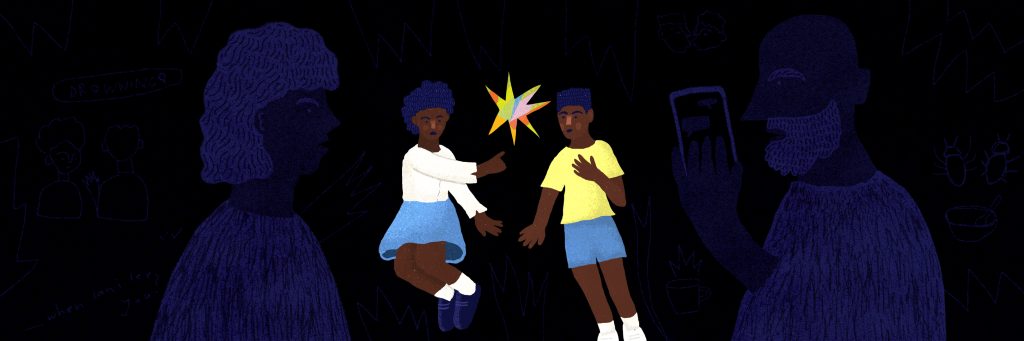
The new game Oyin and I invented is called Shock-Me-I-Shock-You. We play it whenever our parents aren't around. Often, Daddy…
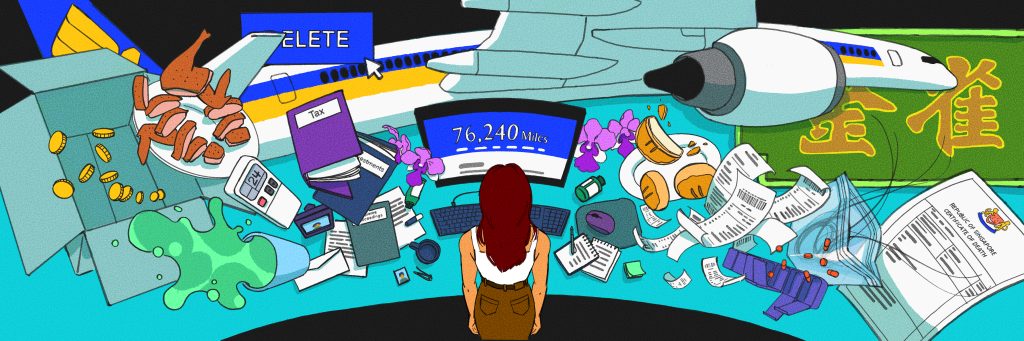
The KrisFlyer miles of a dead person cannot be redeemed. The woman on the hotline said it as if she…
Sign up to receive new pieces of writing as soon as they are published as well as information on competitions, creative grants and more.